
GABA refers to the brain’s primary inhibitory neurotransmitter that reduces neuronal excitability and promotes calmness throughout the central nervous system. GABA works by binding to specialised receptors on nerve cells and reducing their ability to fire electrical signals, which helps regulate anxiety, improve sleep quality, and maintain emotional stability.
The key benefits GABA provides include reducing anxiety, improving sleep, upgrading stress resilience, and stabilising mood. Natural approaches such as consuming fermented foods, practising regular meditation, and exercising can support healthy GABA levels in the brain. GABA supplements are widely available and marketed to promote relaxation and sleep, although their ability to cross the blood-brain barrier remains a subject of scientific debate.
Medications such as diazepam work by enhancing the effect of GABA on GABA-A receptors in the brain. This produces potent sedative and anxiolytic effects. In the UK, and most other countries like Australia and the USA, diazepam is a controlled drug. It requires a valid prescription; anyone seeking to buy diazepam safely must consult a licensed healthcare professional.
What is GABA?
GABA is the primary inhibitory neurotransmitter in the mammalian central nervous system that acts by binding to neuronal receptors and reducing the excitability of nerve cells throughout the brain. According to a 2006 review article published in the British Journal of Pharmacology by N. G. Bowery and T. G. Smart, at least 40% of inhibitory synaptic processing in the mammalian brain involves GABA.
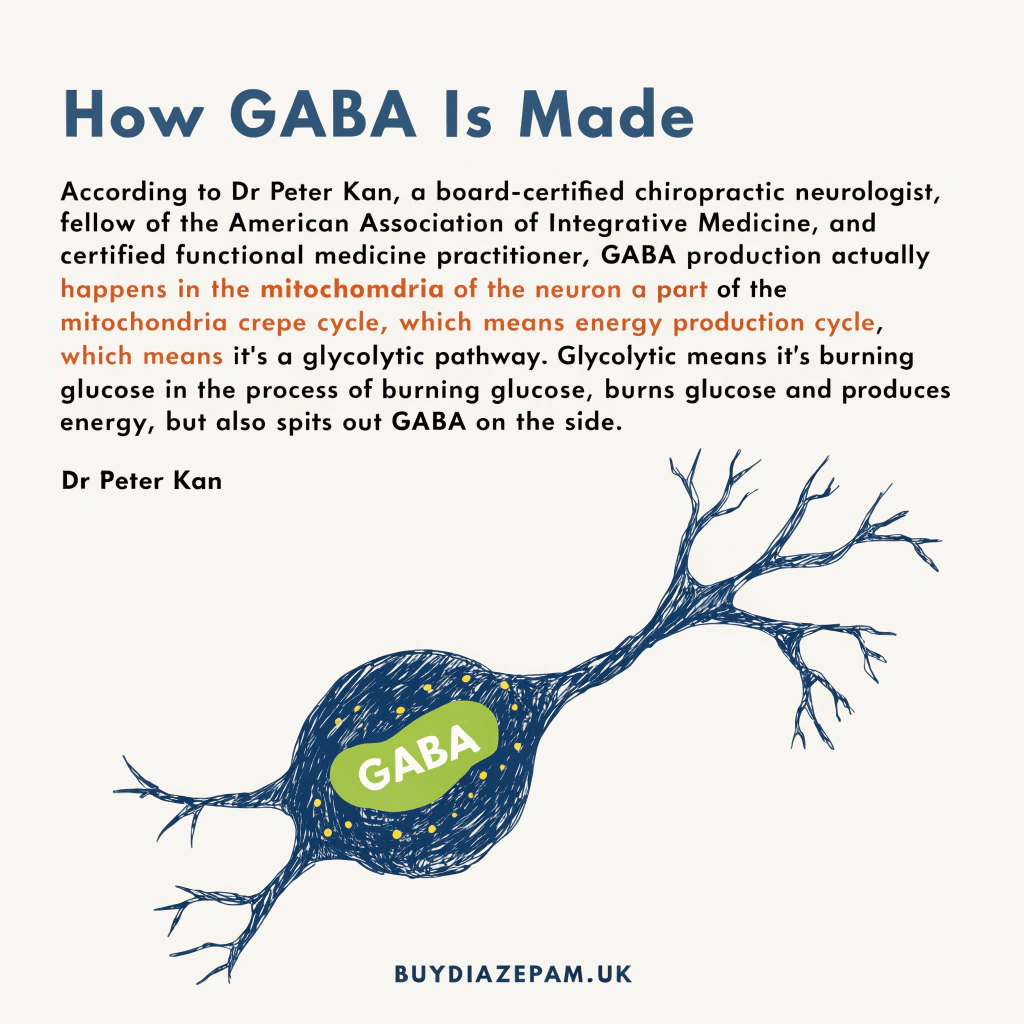
According to Dr Peter Kan, a board-certified chiropractic neurologist, fellow of the American Association of Integrative Medicine, and certified functional medicine practitioner, “GABA production actually happens in the mitochondria of the neuron as part of the mitochondria crepe cycle, which means energy production cycle, which means it’s a glycolytic pathway. Glycolytic means it’s burning glucose in the process of burning glucose, burns glucose and produces energy, but also spits out GABA on the side.”
Excitatory neurotransmitters such as glutamate increase neuronal firing and promote arousal, learning, and responsiveness. Inhibitory neurotransmitters such as GABA counterbalance this activity by reducing neuronal firing, preventing overstimulation, and allowing the brain and body to rest, recover, and regulate emotional responses effectively. Historically, gamma‑aminobutyric acid was first identified in the early 1950s as a naturally occurring neurotransmitter in the mammalian brain.
What is the History of Gamma-Aminobutyric Acid?
The history of Gamma-aminobutyric acid begins with its first chemical synthesis in 1883 by researchers studying plant and microbial metabolites, long before its role in the mammalian brain was understood. Gamma-aminobutyric acid was later identified as a natural metabolite in plants and bacteria, but it was not until 1950 that scientists Eugene Roberts and Sam Awapara independently discovered GABA in the mammalian brain and recognised its function as a neurotransmitter.
This landmark discovery established GABA as the brain’s primary inhibitory neurotransmitter and opened an entirely new field of neuropharmacological research. GABA-A receptors were first characterised in 1967, and the metabotropic GABA-B receptors were described in 1991. These receptor discoveries transformed the understanding of how GABA operates at the cellular level and directly enabled the development of medications targeting GABAergic pathways, including benzodiazepines, barbiturates, and anticonvulsants.
How GABA Works in the Brain?
GABA works in the brain by binding to inhibitory receptors on neuronal membranes, reducing the ability of those neurons to generate electrical signals and preventing excessive neuronal excitability. GABA synthesis occurs through the GABA shunt, in which the excitatory amino acid glutamate is converted into GABA by the enzyme glutamic acid decarboxylase (GAD). This direct biosynthetic link between glutamate and GABA means that the brain’s excitatory and inhibitory systems are tightly coupled and biochemically interdependent.
GABA exerts its effects through two primary receptor subtypes. GABA-A receptors are ionotropic receptors that, when activated, directly open chloride ion channels, causing rapid hyperpolarisation of the neuronal membrane and immediate inhibitory effects.
GABA-B receptors are metabotropic receptors that act more slowly via G-protein-coupled second messenger systems and mediate longer-lasting inhibitory effects, including reducing the presynaptic release of both excitatory and inhibitory neurotransmitters.
The neural inhibition mechanism enabled by GABA is fundamental to normal brain function. The overarching benefit of this inhibitory activity is wide-ranging; virtually every aspect of cognitive and emotional regulation depends on GABA functioning correctly.
What Benefits Does GABA Provide?
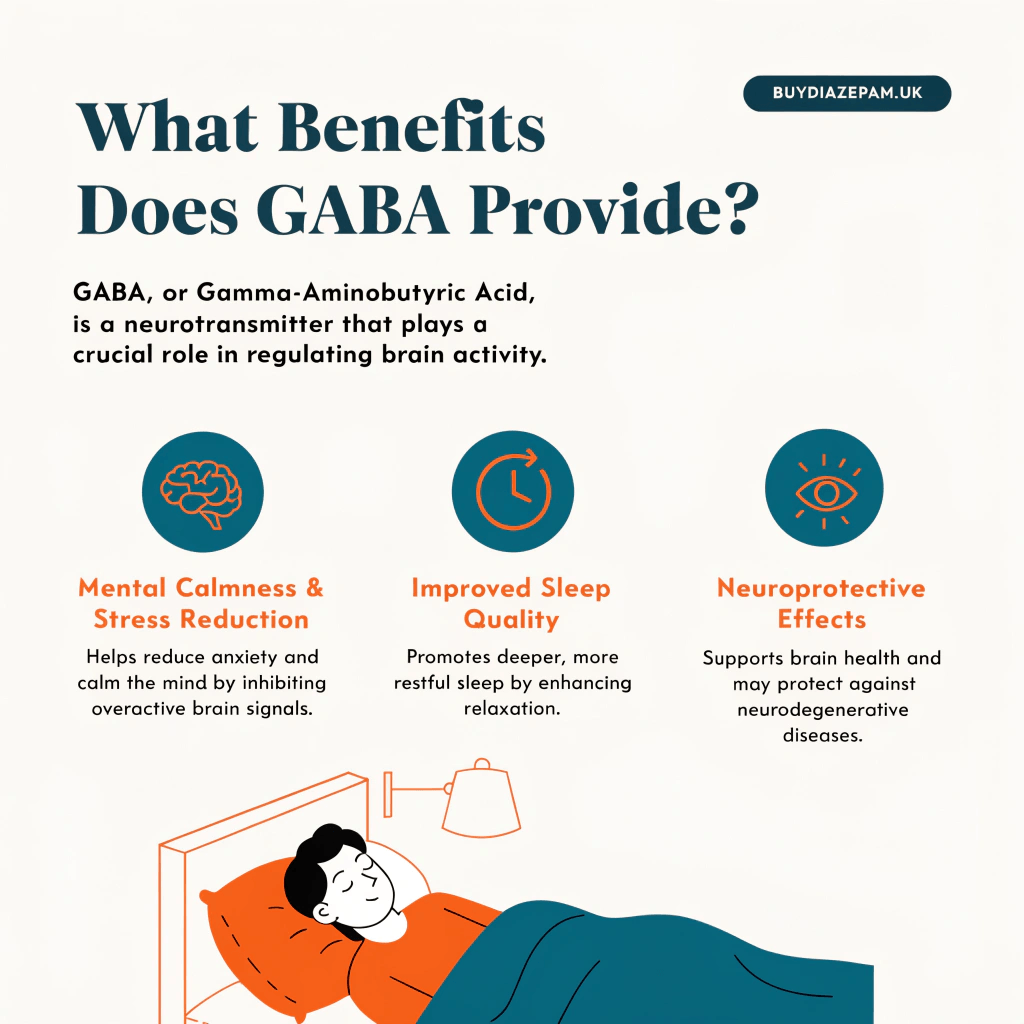
The benefits GABA provides include regulating anxiety levels, promoting sleep onset, enhancing stress resilience, stabilising blood pressure, inducing muscle relaxation, and balancing emotional mood.
The benefits GABA provides are listed below.
- Regulates Anxiety Levels: GABA reduces neuronal excitability in the amygdala and prefrontal cortex, dampening the brain’s fear response and lowering the physiological arousal and cognitive intensity associated with anxiety disorders.
- Promotes Sleep Onset: GABA facilitates the transition from wakefulness to sleep by inhibiting the arousal circuits of the brain, reducing neuronal activity sufficiently for the body to enter and sustain restorative sleep stages, particularly slow-wave NREM sleep.
- Enhances Stress Resilience: By moderating the hypothalamic-pituitary-adrenal axis response, GABA helps prevent cortisol from reaching excessive levels, supporting the nervous system’s capacity to withstand and recover from both psychological and physical stressors.
- Stabilises Blood Pressure: GABA receptors present in cardiovascular tissues and the brainstem regulate vasomotor tone, and adequate GABAergic signalling helps maintain healthy blood pressure by reducing excessive sympathetic nervous system activation.
- Induces Muscle Relaxation: GABA inhibits motor neuron activity in the spinal cord and brainstem, reducing muscle tension and preventing involuntary spasms, which is why GABAergic medications are regularly prescribed as muscle relaxants in clinical practice.
- Balances Emotional Mood: By calming overactive limbic circuits, GABA supports mood stability, preventing the emotional volatility associated with insufficient inhibitory neurotransmitter activity and contributing to overall psychological well-being.
What is The Relation Between GABA and Aanxiety?
The relation between GABA and anxiety is that GABA is the main inhibitory neurotransmitter in the nervous system and acts as a calming agent by directly counteracting the excitatory fight-or-flight signals driven by glutamate and stress hormones. When GABAergic activity is sufficient, the brain can regulate fear signals effectively, keeping anxiety within normal and manageable bounds.
However, when GABA function is reduced or impaired, fear circuits in the amygdala remain overactive, and the brain struggles to return to a state of calm following perceived threats. Reduced GABA function is clinically linked to anxiety disorders, panic disorder, post-traumatic stress disorder (PTSD), and chronic stress, all conditions characterised by disproportionate and persistent fear responses.
Low GABA levels also impair sleep, as the same inhibitory mechanisms that regulate anxiety are responsible for quieting brain activity sufficiently to allow restorative rest. This creates a compounding cycle in which anxiety impairs sleep quality, and poor sleep further diminishes GABA activity, progressively worsening anxiety over time.
What is The Relation Between GABA and Sleep?
The relation between GABA and sleep is that GABA is the brain’s primary inhibitory neurotransmitter and plays a central role in initiating and maintaining sleep by reducing neuronal excitability and calming brain activity sufficiently for the sleep-wake transition to occur. During sleep onset, GABAergic neurones in the ventrolateral preoptic area of the hypothalamus become active and suppress the arousal centres of the brain, enabling the body to enter non-rapid eye movement (NREM) sleep. GABA is particularly important for deep, slow-wave sleep, the most physically restorative phase of the sleep cycle, and helps regulate the balance between sleep and wakefulness throughout the night.
The relationship between GABA and glutamate is central to understanding sleep regulation. As GABAergic inhibition rises in the evening and during sleep, it actively suppresses the excitatory glutamate activity that sustains wakefulness and alertness during the day.
What is The Difference Between GABA and Glutamate?
The difference between GABA and glutamate is that GABA (gamma-aminobutyric acid) is the brain’s main inhibitory neurotransmitter, while glutamate is the primary excitatory neurotransmitter. GABA helps calm brain activity by reducing excessive nerve signalling, promoting relaxation, sleep, and emotional balance. In contrast, glutamate increases neuronal activity, supporting alertness, learning, memory, and cognitive function.
Although they perform opposite roles, GABA and glutamate work together to maintain the brain’s excitatory-inhibitory balance, which is essential for stable mood, proper sleep-wake cycles, stress regulation, and healthy nervous system function. This balance helps prevent both excessive stimulation and excessive suppression of brain activity.
GABA is also directly produced from glutamate through the action of the enzyme glutamic acid decarboxylase (GAD), making them closely connected both biologically and functionally. Because of this relationship, natural ways to support GABA levels often focus on improving the balance between glutamate and GABA rather than increasing GABA alone.
What are The Natural Ways to Increase GABA?
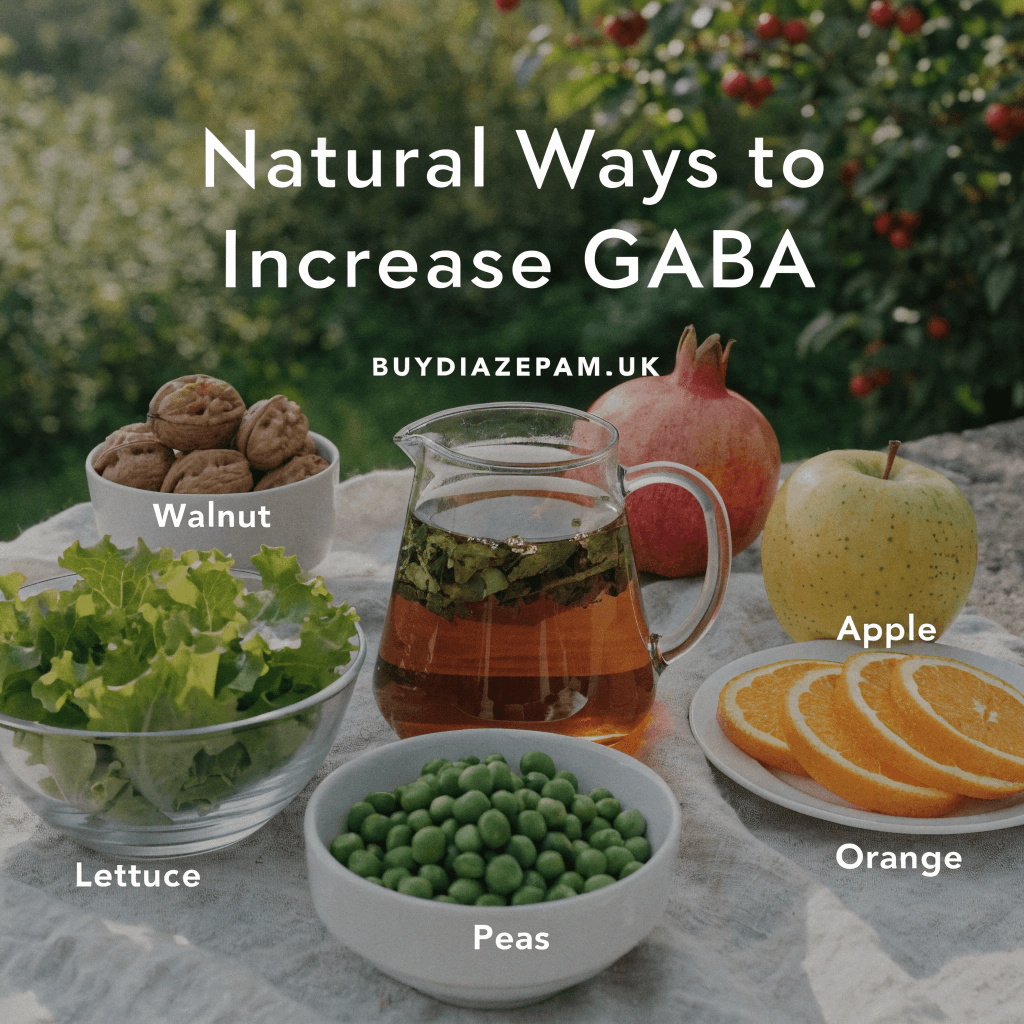
The natural ways to increase GABA include consuming fermented foods, eating GABA-rich vegetables, drinking green tea, and adopting supportive lifestyle practices such as meditation, exercise, and sleep hygiene.
The natural ways to increase GABA are listed below.
Kimchi: Kimchi is a Korean fermented vegetable dish that contains lactic acid bacteria, including strains of Lactobacillus, which produce GABA as a metabolic by-product during fermentation, potentially elevating gut and systemic GABA levels.
- Miso: Miso is a fermented soybean paste containing microorganisms capable of synthesising GABA directly, and its regular consumption has been associated with modest improvements in GABA-related markers in several dietary studies.
- Yoghurt: Yoghurt is a fermented dairy product containing probiotic bacteria that may enhance GABAergic signalling via the gut-brain axis, a bidirectional communication pathway through which gut microbiota influence neurotransmitter activity in the brain.
- Spinach: Spinach is a leafy green vegetable rich in glutamine, the precursor to glutamate and subsequently GABA, and also provides Magnesium, which is essential for the activity of GAD, the enzyme that converts glutamate into GABA.
- Broccoli: Broccoli contains glutamine and Vitamin B6, both of which are required for GABA synthesis, and its regular consumption as part of a varied diet supports the nutritional foundations of healthy GABAergic activity.
- Green Tea: Green tea contains L-theanine, an amino acid that promotes GABA activity in the brain and reduces cortisol levels, producing a state of calm alertness without sedation by modulating inhibitory neurotransmitter pathways.
- Meditation: Meditation increases GABA levels directly, as demonstrated in neuroimaging studies that found a significant increase in brain GABA concentration in practitioners following a single yoga and meditation session compared to controls.
- Exercise: Exercise, particularly aerobic and resistance training, raises GABA levels in the motor cortex and promotes neuroplasticity, with studies demonstrating significantly higher GABAergic activity in regular exercisers compared to sedentary individuals.
- Sleep Hygiene: Sleep hygiene practices, including maintaining a consistent sleep schedule and reducing screen exposure before bed, support the natural nocturnal rise in GABA activity that is essential for initiating and sustaining deep, restorative sleep.
What are GABA Supplements?
GABA supplements are commercially available dietary products containing synthetic or naturally derived gamma-aminobutyric acid, and they are marketed to promote relaxation, reduce anxiety, improve sleep quality, and assist with stress management. These supplements are typically sold in capsule, tablet, or powder form and are taken orally, usually in doses ranging from 100 mg to 750 mg per day.
The primary debate surrounding GABA supplements concerns their effectiveness, specifically whether orally administered GABA can cross the blood-brain barrier and exert direct neurological effects. Some research suggests that GABA’s molecular size may limit its passive passage into the brain, which would restrict the central effects of peripheral administration.
However, other studies, particularly those examining fermented GABA or transdermal formulations, suggest that benefit may occur through indirect routes, including modulation of the enteric nervous system and gut-brain axis signalling. For individuals seeking support for mild anxiety or sleep disturbances, GABA supplements may offer modest benefit, particularly when combined with complementary dietary and lifestyle strategies.
Are There Any Side Effects of GABA Supplements?
No, there are no side effects of GABA supplements, and they are considered safe for short-term use, but prolonged use at high doses can produce adverse effects in some individuals. At elevated doses, GABA supplements may cause tingling or flushing of the skin, drowsiness, mild shortness of breath, and reductions in blood pressure. Long-term use at high doses has not been extensively studied in controlled clinical trials, and there is insufficient evidence to confirm safety beyond several weeks of continuous supplementation. Medications can also cause a GABA imbalance when used alongside GABA supplements.
Which Medications Affect GABA in the Brain?
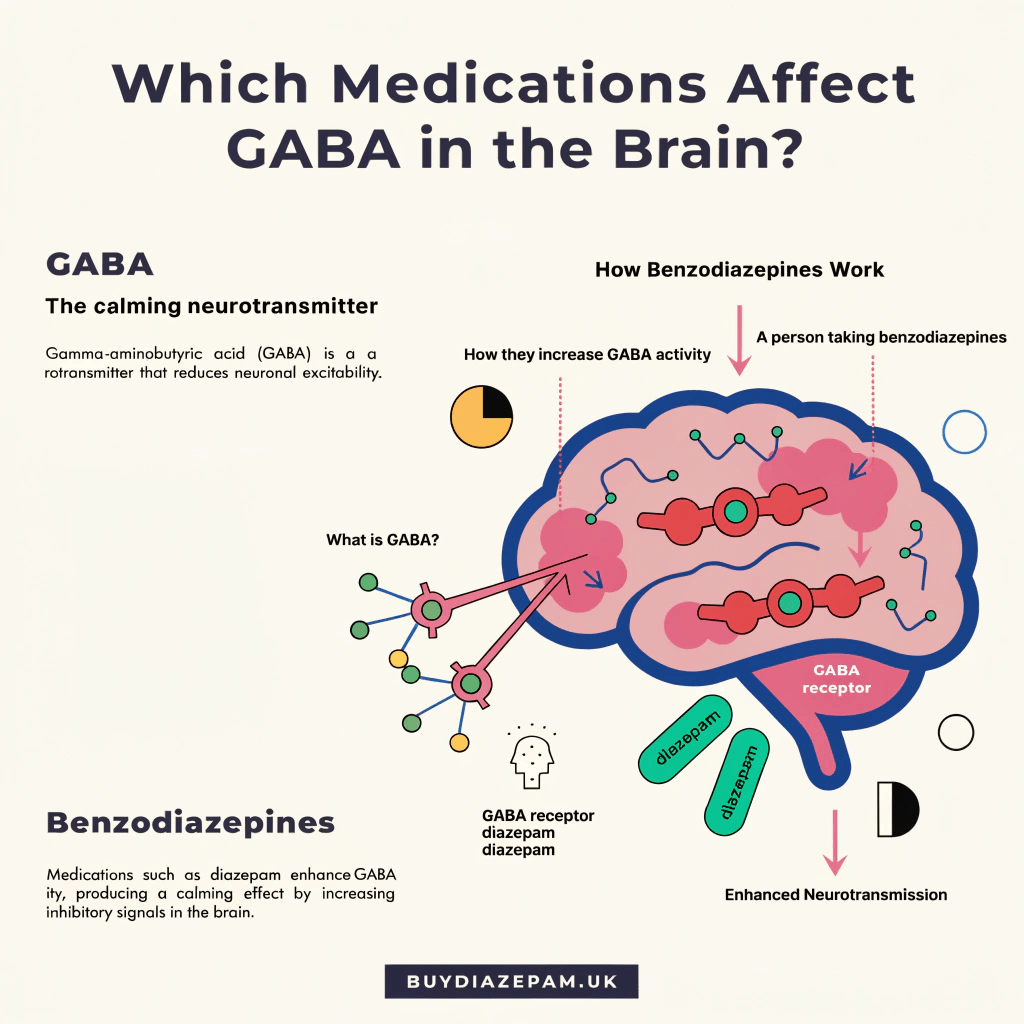
Medications that affect GABA in the brain include benzodiazepines, barbiturates, anticonvulsants, general anaesthetics, and certain muscle relaxants.
Medications that affect GABA in the brain are listed below.
- Benzodiazepines (e.g., Diazepam): Diazepam and related benzodiazepines are positive allosteric modulators of GABA-A receptors that enhance the frequency of chloride channel opening in the presence of GABA, producing potent anxiolytic, sedative, and anticonvulsant effects.
- Barbiturates (e.g., Phenobarbital): Phenobarbital potentiates GABA-A receptor activity at lower doses by prolonging chloride channel opening and at higher doses can directly open chloride channels independent of GABA, which explains the drug’s narrow therapeutic index and elevated overdose risk.
- Anticonvulsants (e.g., Valproate, Gabapentin): Valproate increases GABA synthesis and reduces its enzymatic breakdown, whilst gabapentin modulates GABA activity indirectly; both are used clinically to treat epilepsy, bipolar disorder, and neuropathic pain.
- General Anaesthetics (e.g., Propofol): Propofol potentiates GABA-A receptor activity and produces anaesthesia partly through widespread enhancement of GABAergic inhibition across the cortex and subcortical brain structures.
- Muscle Relaxants (e.g., Baclofen): Baclofen is a GABA-B receptor agonist used to treat muscle spasticity; by activating inhibitory GABA-B receptors in the spinal cord, it reduces abnormal muscle tone and involuntary spasms in neurological conditions.
How Does Diazepam Work on GABA?
Diazepam works on GABA by acting as a positive allosteric modulator on GABA-A receptors throughout the central nervous system, enhancing the calming effects of the neurotransmitter GABA without directly activating those receptors itself. At the cellular level, diazepam binds to a specific allosteric site on the GABA-A receptor complex, located between the alpha and gamma subunits of the pentameric receptor structure.
When GABA binds to its own site on the same receptor complex, diazepam increases the frequency with which the associated chloride ion channel opens. This augmented chloride ion influx causes hyperpolarisation of the neuronal membrane, making it significantly more difficult for that neurone to generate an action potential. The outcome is a broad and rapid reduction in neuronal excitability across brain regions involved in anxiety, seizure activity, and muscle tone, which explains why diazepam is clinically effective across multiple conditions, including severe anxiety, muscle spasm, and alcohol withdrawal.
What Should You Consider Before Taking Diazepam to Support GABA?
Before taking Diazepam to support GABA, a person should consider that it is a potent prescription-only medication with significant risks requiring careful medical evaluation before use. Diazepam is used short-term for severe anxiety, muscle spasms, and alcohol withdrawal, but carries a well-established risk of physical and psychological dependence, particularly when use extends beyond two to four weeks. Sedation, cognitive impairment, and withdrawal symptoms, which can include rebound anxiety, insomnia, and seizures, make abrupt discontinuation potentially dangerous.
Key safety considerations include disclosing any personal or family history of addiction, respiratory problems, liver or kidney disease, sleep apnoea, or depression to the prescribing clinician before diazepam is commenced. Alcohol and opioid analgesics must be strictly avoided during diazepam treatment due to the risk of dangerous central nervous system depression, which can result in fatal respiratory failure. GABAergic activity can be unpredictably amplified when diazepam is combined with other CNS depressants, making sustained medical supervision essential throughout the entire course of treatment.
Is Buying Diazepam in the UK for GABA Support Possible Without a Prescription?
Buying diazepam for GABA support in the UK without a prescription is not legal because of the drug’s classification under UK controlled substances legislation. Diazepam is a benzodiazepine classified as a Class C, Schedule 4 controlled drug under the Misuse of Drugs Act 1971 and the Misuse of Drugs Regulations 2001. It is therefore illegal to possess diazepam without a valid prescription, and it is a criminal offence to supply or distribute it without appropriate authorisation.
A valid prescription from a registered UK healthcare professional is required to legally obtain and buy diazepam 10mg, regardless of the intended purpose. Even if someone wishes to buy diazepam specifically for GABA support or anxiety treatment, they must receive a formal clinical assessment and prescription first. However, some pharmacists and online platforms like ours provide emergency access to 100% legit benzodiazepines, including diazepam, for GABA support.