
Anxiolytics are commonly used medications that are used against anxiety or seizures, and which work by calming the central nervous system. Anxiolytics mainly work by altering neurotransmitters in the brain. Depending on the drug class, some amplify the effect of gamma-aminobutyric acid (GABA), while others work by balancing serotonin and norepinephrine levels. Treating anxiety is a common use for Anxiolytics and also for insomnia, social phobia, and seizure disorders.
Benzodiazepines, SSRIs and SNRIs, Buspirone, and Beta-Blockers are the main types of Anxiolytics. The common dosages of Anxiolytics are 2 mg to 10mg for Diazepam, which contains benzodiazepines, and can be taken 2 to 4 times a day depending on the treatment. SSRIs and SNRIs can be taken at 25 mg to 50 mg once daily; Buspirone groups are typically prescribed 7.5 mg twice daily; and Beta-Blocker groups are commonly taken 10 mg to 40 mg. In the UK and other countries, Anxiolytics like diazepam medications are usually bought with a doctor’s prescription. The authorities, like the Medicines and Healthcare products Regulatory Agency (MHRA), legally control benzodiazepine medicines.
What is An Anxiolytic?
An anxiolytic, antipanic, or anti-anxiety agent, often called minor tranquilizers, is a prescribed medication mainly used to prevent anxiety or seizures by enhancing GABA to calm the central nervous system. Anxiolytic is correctly pronounced as /ˌæŋ.zi.əˈlɪt.ɪk/ (ANG-zee-uh-LIT-ik). Based on the mechanism, medically, anxiolytics are classified into several groups, such as benzodiazepines, which are GABA enhancers, SSRIs or SNRIs, which are serotonin modulators, buspirone, which is mainly a serotonin agonist, and lastly beta-blockers that are adrenergic antagonists.
According to the NIMH, 19.1% of U.S. adults experienced any anxiety disorder in the past year, underscoring anti-anxiety medication demand. According to Dr. Andrew Huberman, “Anxiolytics like benzodiazepines work by increasing GABA transmission, rapidly suppressing anxiety but risking dependence.”
Anxiolytics and sedatives are both used to depress the central nervous system, but their primary goals are different. Anxiolytic medication mainly targets the emotional and psychological symptoms of anxiety and panic. On the other hand, Sedatives are often used for insomnia or surgical procedures because they increase slow brain activity and drowsiness.
Anxiolytic drugs mainly work in the brain. Humankind has been trying to develop this medication since the start of civilization, which makes the history of anxiolytics really rich.
What is The History of Anxiolytics?
The history of anxiolytics began with mankind’s starting attempts to relax the nervous system when under stress, and it has evolved with significant medical advancements until now. In ancient times, people used to rely on herbal remedies such as valerian root, kava, and chamomile to calm the nerves. In the early 1860s, the remedies evolved to bromides, and in the early 1900s, people started to rely on barbiturates. They were effective but were prone to overdose and dependence.
The modern pharmaceutical era started when substances like Meprobamate were started to be used in the 1950s. After that, the medications were developed into benzodiazepines like Librium and valium in the 1960s. And lastly, in the 1980s, there was the emergence of SSRIs in the 1980s. By the time medications were able to tackle both short-term and long-term nervous system diseases.
Along with their specified history, Anxiolytics have a systematic way to work in the brain.
How Do Anxiolytics Work?
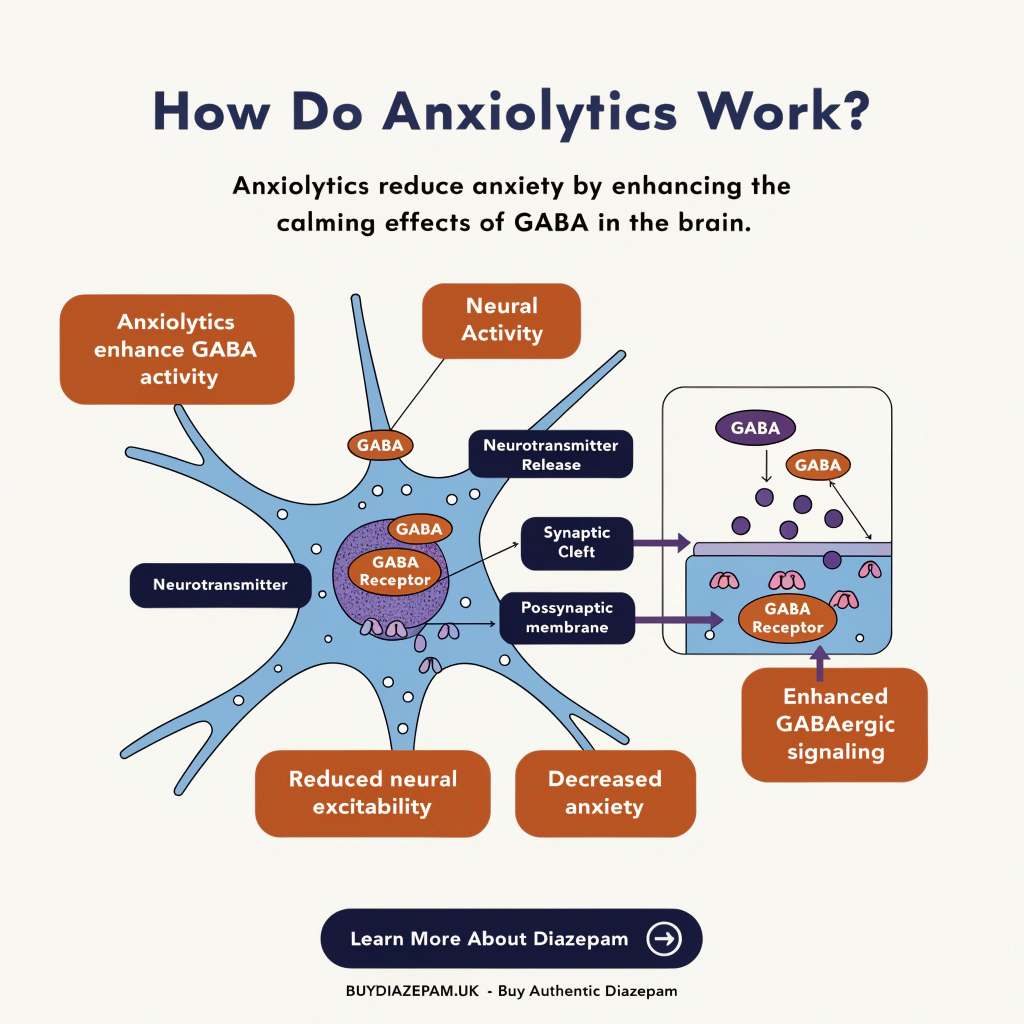
Anxiolytics work by calming the central nervous system by amplifying the effects of the GABA neurotransmitter to reduce overactivity and reach a state of relaxation. Different types of anxiolytics mainly increase the GABA activity to simulate the main mechanism of anxiolytics.
The SSRI type of anxiolytics focuses on serotonin and mood regulation. Anxiolytics work in the brain and alter chemicals that reduce depression in the central nervous system and produce a calming effect. This whole process has several benefits, including slowing nerve signals to quickly relieve anxiety, panic symptoms, and muscle tension. As a result, it improves the state of the patients.
To understand the anxiolytic mechanism deeper, people need to know the types of anxiolytics, including their uses.
What are The Uses of Anxiolytics?
The uses of Anxiolytics include Generalized Anxiety Disorder (GAD), Panic Disorder, Social Anxiety, Acute Anxiety, and MRI-related anxiety. Specific Phobias, Post-traumatic Stress Disorder (PTSD), and Obsessive Compulsive Disorder (OCD).
The uses of Anxiolytics are listed below.
- Generalized Anxiety Disorder (GAD): Generalized Anxiety Disorder (GAD) is a mental health condition in which the patient has excessive and uncontrollable stress about everyday events for at least six months. Anxiolytics amplify GABA or serotonin activity to reduce excessive stress and help in this case.
- Panic Disorder: Panic Disorder is a type of anxiety disorder in which the patient gets unexpected and intense panic attacks without a clear trigger. In this type of situation, fast-acting anxiolytics are prescribed that slow down the central nervous system. Long-term anxiolytics are sometimes prescribed in these types of cases.
- Social Anxiety Disorder: Social Anxiety Disorder is an intense fear of social situations or gatherings, which leads the patient to avoidance and loneliness. For this disorder, anxiolytics like SSRIs/SNRIs reduce the chronic symptoms, but sometimes Diazepam is prescribed to aid acute situations.
- Acute Anxiety: Acute Anxiety is a short-term emotional and physical reaction triggered by threat or traumatic events, where the patient often responds with physical violence. Anxiolytics provide rapid relief in this kind of situation by slowing down the symptoms.
- MRI-related Anxiety: MRI-related Anxiety is a situational distress when the patient is taken to a magnetic resonance imaging scan, mainly it is the fear of the diagnosis. Anxiolytics like alprazolam are given before the procedure for quick calming.
- Specific Phobias: Specific Phobias are an intense, irrational fear of a specific object, animal or situation, such as heights, water, dogs, etc. This causes extreme avoidance behaviors. For these phobias, anxiolytics can be used as a primary medication that lowers the patient’s anxiety.
- Post-traumatic Stress Disorder (PTSD): Post-traumatic Stress Disorder (PTSD) is a mental condition that leads to severe anxiety or avoidance behaviors after experiencing life-threatening or harmful events. Anxiolytics like Diazepam are often used for PTSD, but with extreme caution.
- Obsessive-compulsive Disorder (OCD): Obsessive-compulsive Disorder (OCD) is a mental health condition where the patient has unwanted intrusive thoughts, causing the patient to do repetitive tasks. Anxiolytics such as SSRIs reduce symptoms related to this disorder.
Anxiolytics are really effective in so many cases, but like any other medication, they have good and bad effects too.
Are there Any Side Effects of Anxiolytics?
Yes, anxiolytics can cause side effects such as drowsiness, dizziness, fatigue, memory or concentration issues. It is because anxiolytics depress the central nervous system by amplifying GABA activity in the brain.
There are more serious or long-term risks of anxiolytics, such as nausea, blurred vision, sexual dysfunction, lowered blood pressure, and potential dependence or withdrawal with long-term use, especially with certain types. To avoid these kinds of situations, the patient must consume anxiolytics with an experienced doctor’s prescription.
Knowing the substances that interact with Anxiolytics might help anyone to improve the treatment.
Which Substances Interact with Anxiolytics?
The substances that interact with anxiolytics are listed below.
- Alcohol: Combining alcohol with anxiolytics has dangerous results, including impaired motor skills, severe sedation, and risk of high respiratory depression.
- Opioids: In case of mixing opioids and anxiolytics need careful dosage monitoring other than it can cause high risks of coma and respiratory failure.
- CYP3A4 Inhibitors: These elements block metabolic enzymes for anxiolytics that cause drug buildup in the bloodstream and greatly increase toxicity.
- Grapefruit Juice: Grapefruit juice is a CYP3A4 inhibitor in the gut and liver that boosts anxiolytic concentration, which increases side effects.
- MAOIs: Mixing MAOIs with certain anxiolytics, mainly SSRIs or Buspirone, can cause rapid, life-threatening serotonin syndrome.
It is important to know the common dosage of Anxiolytics so that there are no extra side effects and for a smooth treatment.
What are The Common Dosages of Anxiolytics?
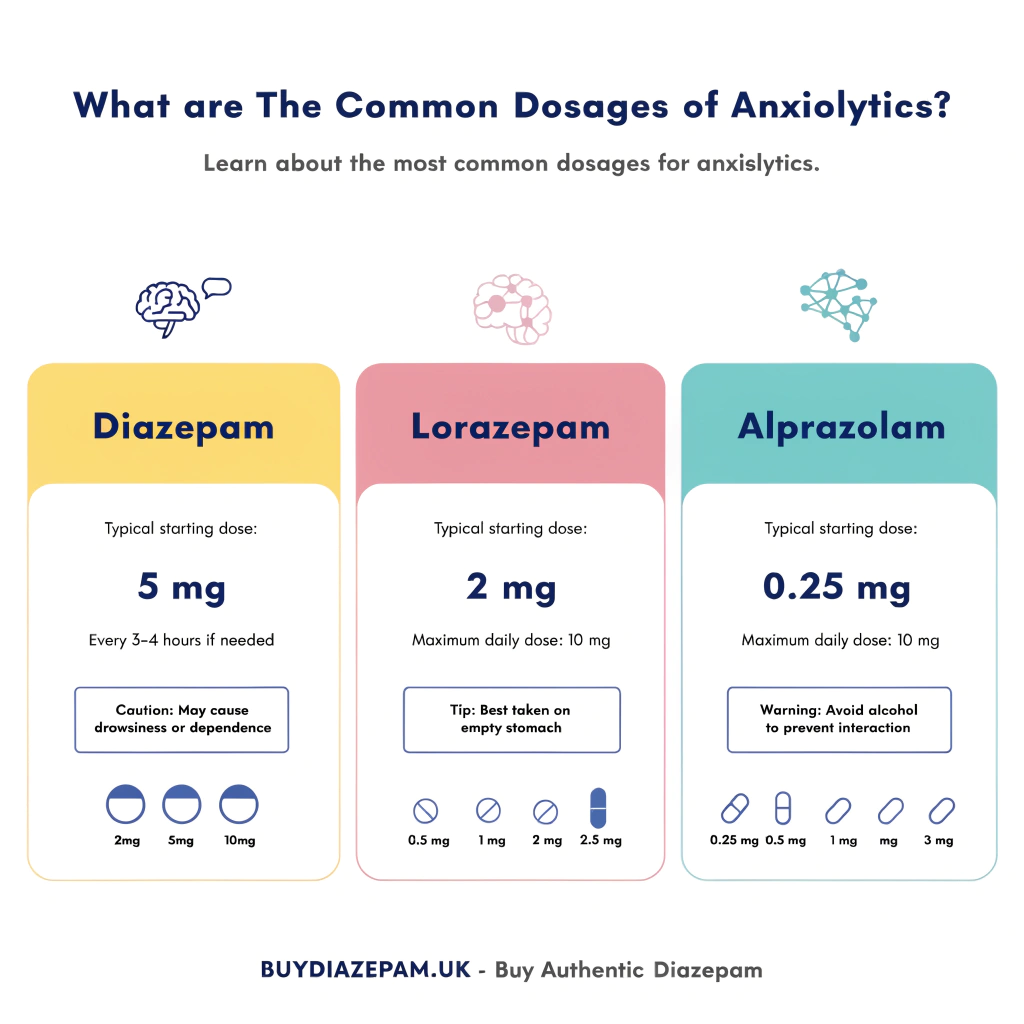
The common dosage of anxiolytics varies depending on various factors such as specific medication, severity of the condition, the patient’s age, and kidney or liver function.
Anxiolytics can be categorized mainly into two categories: benzodiazepines and non-benzodiazepines. Benzodiazepines are typically used for short-term usage, mainly to minimize the risk of dependence. For Benzodiazepines, patients can consume Diazepam. For non-benzodiazepines, there are medications like SSRIs, SNRIs, or buspirone. They are mainly for long-term management; as a result, they are consumed at a low rate initially.
The common dosages of Anxiolytics are 2 mg to 10mg for Diazepam, which contains benzodiazepines, and can be taken 2 to 4 times a day depending on the treatment. SSRIs and SNRIs can be taken 25 mg to 50 mg once daily, Buspirone groups are typically prescribed 7.5 mg twice daily, and lastly, Beta-Blocker groups are commonly taken 10 mg to 40 mg.
The types of anxiolytic medications can be crucial information in cases of emergencies.
What are The Types of Anxiolytic Medications?
The types of Anxiolytic medications include Benzodiazepines, SSRIs and SNRIs, buspirone, and Beta-Blockers. The types of Anxiolytic medications are listed below.
- Benzodiazepines: Benzodiazepines are found in Diazepam, which is a fast-acting anxiolytic that enhances GABA neurotransmitter activity in the brain and reduces tension, anxiety, and panic symptoms.
- SSRIs and SNRIs: SSRIs (Selective Serotonin Reuptake Inhibitors) and SNRIs (Serotonin-Norepinephrine Reuptake Inhibitors) are types of anxiolytics that increase serotonin or norepinephrine levels for long-term anxiety reduction.
- Buspirone: Buspirone is a non-benzodiazepine azapirone anxiolytic that acts as a partial serotonin 1A receptor and provides anti-anxiety effects with almost no dependence risk.
- Beta-Blockers: Beta-blockers are cardiovascular medications that are used to block adrenaline receptors, and they reduce the physical symptoms of situational anxiety, for example, high heart rates.
Depending on the types of Anxiolytics, there are several benefits of Diazepam.
What are The Benefits of Diazepam Used as an Anxiolytic?
The benefits of Diazepam used as an anxiolytic are listed below.
- Rapid relief: Diazepam acts quickly and reduces severe anxiety and panic attack symptoms if consumed in the right doses right after the event.
- High effectiveness: Diazepam is also highly effective in calming the central nervous system during an intense amount of distress.
- Reduce insomnia: It helps patients to reduce insomnia by relaxing the intense amount of anxiety and stress.
- Muscle relaxation: It balances the physical muscle tension caused by the severe level of anxiety and distress.
- Pre-procedure calm: In cases of an MRI scan or endoscopy, it helps to calm the patients who are afraid.
- Alcohol withdrawal aid: Diazepam safely manages acute anxiety caused by alcohol withdrawal syndrome.
In the United Kingdom, to avail these benefits of Diazepam in severe cases, one needs to know where to buy quality Diazepam.
How to Purchase Quality Diazepam in the United Kingdom?
The common ways to purchase quality Diazepam in the UK are listed below.
- Registered pharmacies: This includes NHS or private pharmacies dispensing diazepam legally with a valid doctor’s prescription.
- Hospital prescription: Hospital doctors supply diazepam during supervised treatment or emergency care.
- GP prescription: A general practitioner assesses symptoms and prescribes diazepam when clinically appropriate.
- Authorized online pharmacies: UK-registered online pharmacies provide diazepam following prescription and safety checks.
Although there are several ways to buy quality Diazepam in the United Kingdom, it is necessary to grab a prescription too.
Can A Person Buy Diazepam for Anxiety Without A Prescription in the UK?

No, it is not possible to buy diazepam for anxiety without a prescription in the UK because it is a tightly regulated medicine that a qualified medical professional must prescribe to ensure safe use. Proper medical usage is needed for anxiolytics, such as diazepam and any other benzodiazepines, because an anxiolytic can cause tolerance, dependence, or withdrawal problems if the prescribed dosage is not maintained.
Under UK law, diazepam is classified as a Class C, Schedule 4 controlled drug, which means its supply and possession are strictly controlled to reduce misuse, dependence, and safety risks.
Although the law requires a prescription, in rare emergencies or special situations, some shops or services may claim to help a person buy diazepam in emmergency needs. We have authentic diazepam for sale in such cases as well.
Overall, a professional pharmacist should know the uses of anxiolytics, the mechanism of anxiolytics, types of anxiolytics, and the dosage of anti-anxiety meds.