
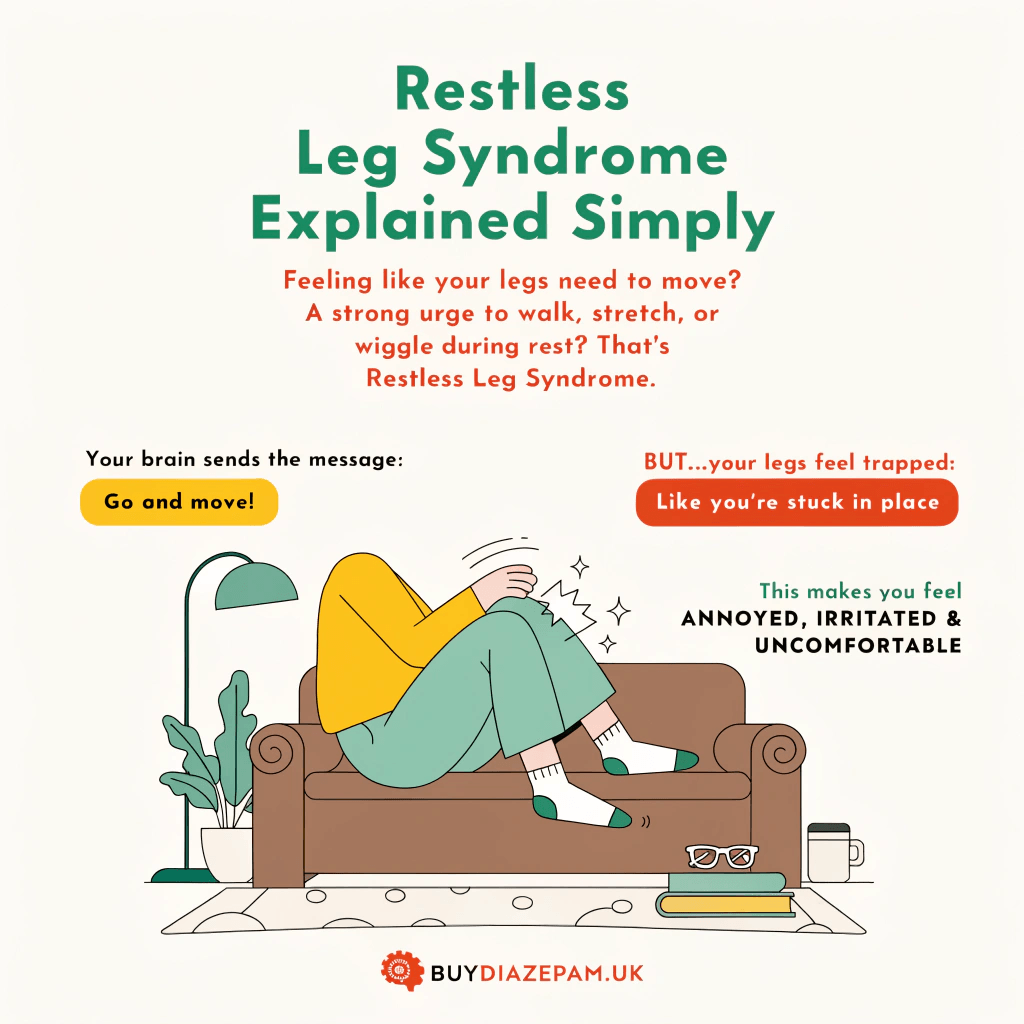
Restless Leg Syndrome (RLS) is a disorder that causes sensations in the patient’s legs. This disorder works by disrupting the patient’s central nervous system.
The main types of RLS include Primary (Idiopathic) RLS and Secondary RLS. The main symptoms of Restless Leg Syndrome are the urge to move legs, crawling or tingling sensations, difficulty falling asleep, and daytime fatigue. The common causes of restless leg syndrome are genetic components, dopamine dysfunction, iron deficiency, pregnancy, chronic kidney disease, etc.
The main treatment options for restless leg syndrome are core medical therapies, prescription devices, lifestyle and self-care approaches, and medications. For this disease, a benzodiazepine named diazepam works as a sedative and muscle relaxant to enhance GABA neurotransmitters.
Especially in the UK and other countries like Australia, diazepam is a controlled medication. It is restricted to sell without a doctor’s prescription. But we at Buy Diazepam UK provide diazepam in times of emergency or severe need. We are a bulk wholesaler and retailer in the UK who also delivers to any other country, such as Australia, the USA, and Canada. Let’s keep reading to know more.
What is Restless Leg Syndrome?
Restless Leg Syndrome (RLS), also known as the Willis-Ekbom disease, is a neurological disorder that causes an intense urge to move legs with uncomfortable sensations. According to the General Practice Research Database (GPRD), 41 persons per 100k are diagnosed with this disease per year.
According to Dr. Andy Berkowski, “It’s an uncomfortable, indescribable sensation, maybe bugs crawling on their legs or feeling like they want to explode from the inside.” It feels like a sensation of creeping, crawling, and throbbing in the muscles of the legs. The sensations temporarily stop with physical movement like walking or stretching.
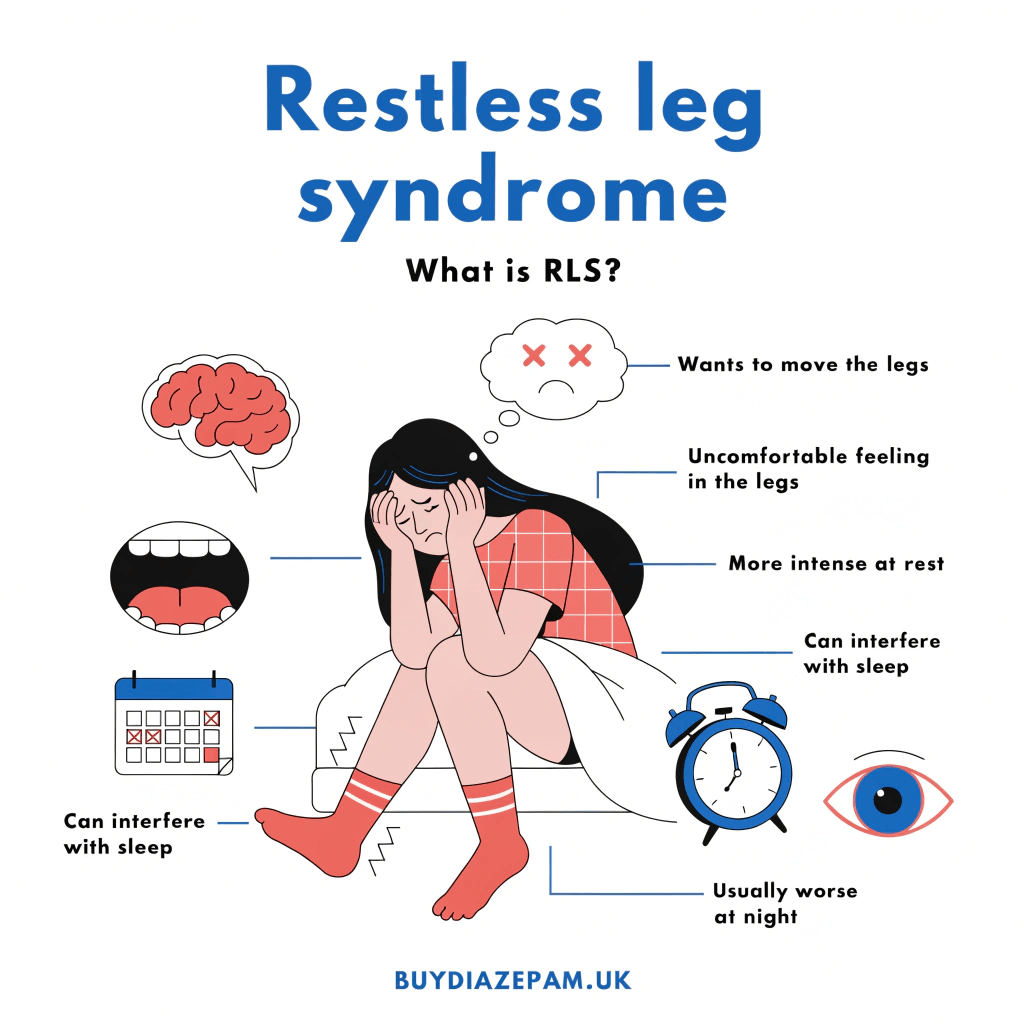
Restless legs syndrome causes difficulty falling asleep, difficulty staying asleep, early morning awakening, daytime fatigue, and sleep dissatisfaction. The disorder works by dysfunction in the brain’s dopamine pathways because of low iron levels. With its vast history, this disease was first formally classified as a disease in 1945.
What is the History of Restless Leg Syndrome?
The history of Restless Legs Syndrome dates back to the start of the 17th century. It was first described by Sir Thomas Willis in the late 17th century as a tormenting nocturnal movement condition. But medical scientists were curious about it.
Restless Leg Syndrome gained proper later medical recognition when it was formally defined by Swedish neurologist Karl-Axel Ekbom in 1945. From his clinical observations, more new perspectives were discovered regarding this. The condition was successfully reclassified from a psychiatric view to an organic neurological disorder in the mid-20th century. In modern days, researchers have categorized different types of Restless Leg Syndrome.
What are The Types of Restless Leg Syndrome?
The types of Restless Leg Syndrome are classified based on causes, age of onset, and severity. The types of Restless Leg Syndrome are listed below.
- Types of Restless Legs Syndrome by Cause: Based on causes, Restless Legs Syndrome is classified into two types. Primary (Idiopathic) RLS and Secondary RLS. Primary (Idiopathic) RLS means the condition without a clear trigger. Its causes include genetic inheritance and unknown neural changes. Secondary RLS is a condition that occurs when an underlying medical issue triggers it. Its causes include iron deficiency, pregnancy, kidney disease, etc.
- Types of Restless Legs Syndrome by Age of Onset: The types of restless legs syndrome by age of onset are Early-onset RLS and Late-onset RLS. Early-onset RLS means symptoms that begin before the age of 45. It happens between the ages of 20 and 40 years. Late-onset RLS means the condition starts after age 45. It happens between the ages of 45 and 60 years.
- Types of Restless Legs Syndrome by Severity: The types of Restless Legs Syndrome by severity are Intermittent RLS, Chronic Persistent RLS, and Refractory RLS. Intermittent RLS means the occasional discomfort. Its causes include severe stress or travelling. Chronic Persistent RLS means frequent disruptions in the patient’s body. The causes include severe iron deficiency or genetics. Refractory RLS means the condition that resists treatment. The main causes are dopamine augmentation.
Different types of restless leg syndrome carry different types of symptoms.
What are The Symptoms of Restless Leg Syndrome?
The symptoms of Restless Leg Syndrome include Urge to Move Legs, Crawling or Tingling Sensations, Worse at Rest, Worse in the Evening or at Night, Relief With Movement, Difficulty Falling Asleep, Frequent Awakenings, Daytime Fatigue, Periodic Limb Movements in Sleep (PLMS). The symptoms of Restless Leg Syndrome are listed below.
- Urge to Move Legs: Urge to move legs means when the patient has a restless and powerful desire to move limbs to relieve the discomfort. According to Dr. Daniel Baroni, while describing the patient’s urge, “these people have an urge to kind of move their legs throughout the night.”
- Crawling or Tingling Sensations: Crawling or tingling sensations mean the unpleasant feeling of creeping or deep itching within the patient’s legs. According to Dr. Andy Berkowski, “it’s an uncomfortable, undescribable sensation, maybe bugs crawling on their legs.”
- Worse at Rest: Worse at rest means when the patient’s uncomfortable symptoms start to show up during physical inactivity, such as sitting. According to Dr. Daniel Baroni, “when they’re at rest, these symptoms come on.”
- Worse in the Evening or at Night: Worse in the evening or at night means when the patient’s discomfort starts increasing during the evening or at night. According to Dr. Charlene Gamaldo, while describing the symptoms, “it peaks at night.”
- Relief with Movement: Relief with movement means the patient gets relief from the distress when in active physical motion, such as walking. According to Dr. Daniel Baroni, “when I get up and go, the symptoms go away.”
- Difficulty Falling Asleep: Difficulty falling asleep means the patient’s ability to rest or sleep is heavily disrupted due to the discomfort of restless leg syndrome. According to Dr. Eric Berg, “it really keeps you from sleeping. It’s very uncomfortable.”
- Frequent Awakenings: Frequent awakenings mean involuntary body movements that continuously and severely interrupt the patient’s sleep cycle. According to Dr. Andy Berkowski, “You wake up at night with symptoms, may even frequently, and can’t get back to sleep.”
- Daytime Fatigue: Daytime fatigue means a high level of tiredness that severely affects the patient during waking hours. According to Dr. Charlene Gamaldo, “it causes problems with daytime functioning as a result.”
- Periodic Limb Movements in Sleep (PLMS): Periodic Limb Movements in Sleep means repetitive and involuntary limb jerking while the patient is completely asleep. According to Dr. Anderson, “you may have jerkiness in your legs while you are asleep.”
Restless leg syndrome can severely affect a person’s daily life.
How Does Restless Leg Syndrome Affect a Person?
The ways Restless Leg Syndrome affects a person are listed below.
- Sleep Deprivation: The uncontrollable urge to move legs causes a huge amount of discomfort, which makes it impossible to rest peacefully.
- Mood Changes: The ongoing physical discomfort and lack of sleep trigger frequent mood changes.
- Impaired Focus: The continuous urge to move legs causes a lack of focus, making it difficult to concentrate on work and studies.
- Social Isolation: The patient usually avoids social situations that require sitting still due to discomfort in his legs.
- Fatigue: Chronic disruptions at night lead to extreme daytime tiredness, draining the patient’s physical energy.
To reduce the effect of RLS, one should know its causes.
What are The Causes of Restless Leg Syndrome?
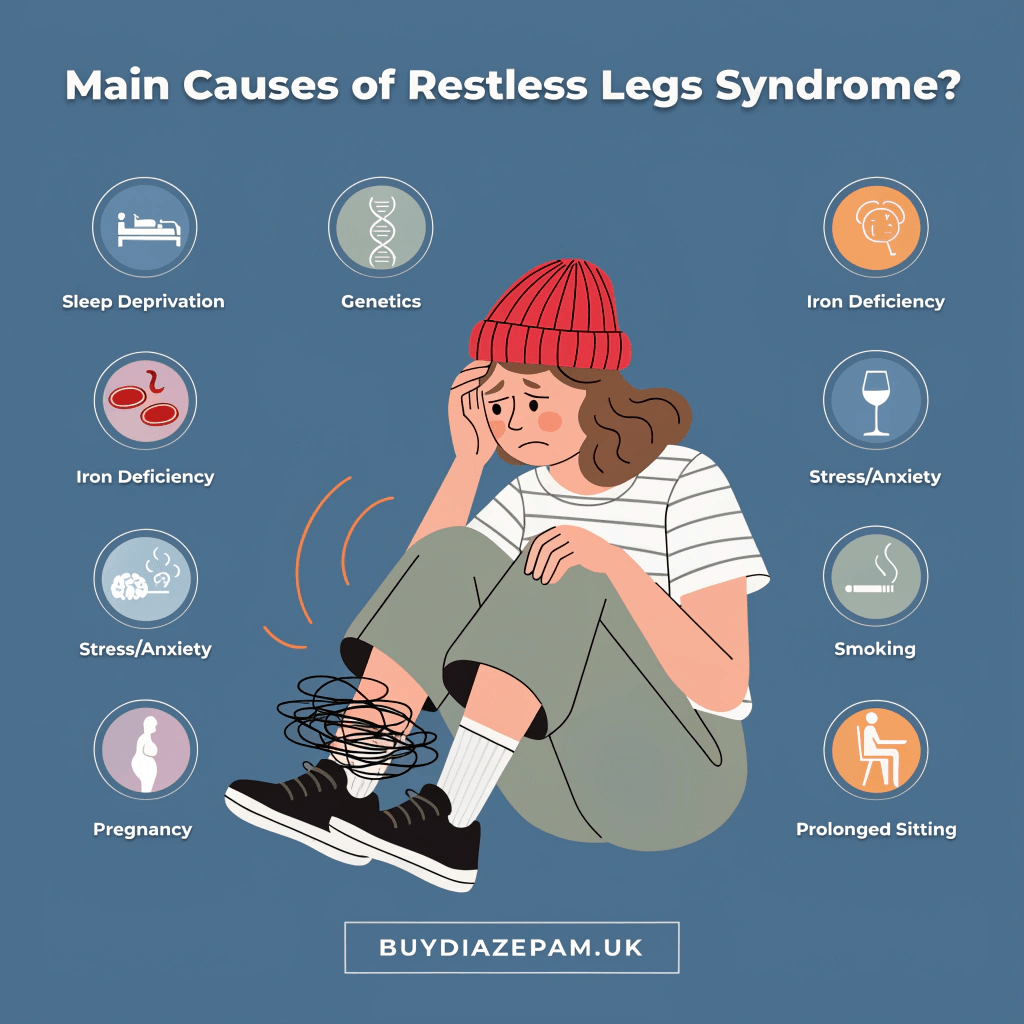
The causes of Restless Leg Syndrome include genetic components, dopamine dysfunction, iron deficiency, pregnancy, chronic kidney disease, and diabetes. The causes of Restless leg syndrome are listed below.
- Genetic Component: Genetic components mean inherited DNA characteristics that might increase the patient’s possibility of having restless leg syndrome. According to Dr. Andy Berkowski, “There are certain gene variants that put people at greater risk of developing restless leg syndrome. It does tend to run in families because families share the same genetic risk factors.”
- Dopamine Dysfunction: Dopamine dysfunction means the inability to process the brain chemicals responsible for triggering the restless urge. According to Dr. Andy Berkowski, “The shipping ports that receive dopamine by one brain cell are the dopamine receptor, which seems to be defective”
- Iron Deficiency: Iron Deficiency means a lack of proper iron levels within the brain, which can disrupt neurotransmitters to trigger restless leg syndrome. According to Dr. Andy Berkowski, “People with restless leg syndrome actually have lower iron levels in their brain than people without restless leg syndrome, even if their blood levels of iron look the same.”
- Pregnancy: Pregnancy is a cause of restless legs symptoms because the growing baby takes support from the mother’s iron reserves in the body. According to Dr. Andy Berkowski, “A huge percentage of women during pregnancy can experience restless leg syndrome.”
- Chronic Kidney Disease: Chronic kidney disease means a long-term kidney disorder that may create a chemical imbalance responsible for restless leg syndrome. According to Dr. Charlene Gamaldo, “People who have kidney disease, particularly end-stage renal disease, it can put them at higher risk, probably because of the iron.”
- Diabetes: Diabetes is a metabolic disease that creates high blood sugar. It damages blood vessels and nerves, resulting in restless leg syndrome. According to Dr. Daniel Baroni, “Other conditions, such as chronic medical illnesses, can sometimes do it. Diabetes that’s not fully treated, neuropathy, which is nerve damage.”
- Peripheral Neuropathy: Peripheral neuropathy means permanent nerve damage in the body, which can create numbness in the body over time. According to Dr. Charlene Gamaldo, “Patients with peripheral neuropathy, particularly those who suffer from diabetes, could be at higher risk.”
- Medications: Medications mean specific prescribed or wrong dosage of medications that might trigger the restless leg symptoms. According to Dr. Daniel Baroni, “Some medicines can actually make restless leg symptoms worse. People will take those substances with the effort of trying to get to sleep, but in reality, it’s having a reverse effect.”
There are several risk factors of Restless leg syndrome.
What are the Risk Factors of Restless Leg Syndrome?
The risk factors of restless leg syndrome are mentioned below.
- Genetics: Genetics means inherited DNA traits from parents or grandparents that may increase the risk of Restless leg syndrome.
- Iron Deficiency: Iron deficiency means low iron levels in the blood that may trigger the symptoms of restless legs.
- Gender: Women are more likely to have restless leg syndrome. Especially during the times of pregnancy.
- Obesity: Obesity means a higher BMI count (more than 30), that increase the risks of restless leg syndrome.
- Chronic Diseases: Patients having chronic diseases like kidney failure, diabetes, and arthritis are more likely to have restless leg syndrome.
- Lifestyle Factors: Patients living an unhealthy lifestyle, including physical inactivity, smoking, and alcohol consumption, have a higher chance of getting restless leg syndrome.
How is Restless Leg Syndrome Diagnosed?
The main ways to diagnose Restless Leg Syndrome are listed below.
- Clinical Diagnosis: Clinical diagnosis is a procedure based on the patient’s description of symptoms and medical history related to restless leg syndrome.
- Diagnostic Criteria: Diagnostic criteria are the important medical key points related to restless leg syndrome. This includes an urge to move legs with sensations, worse at rest, relieved by movement, and worsening in the evening.
- Blood Test for Ferritin: A blood test for Ferritin means checking the iron levels in the blood to detect iron deficiency.
- Sleep Study (If needed): Sleep study is crucial information to check whether the patient is having a problem with proper sleep or not.
Even after proper diagnosis, it is not possible to get a full cure from RLS.
Can Restless Leg Syndrome Be Cured?
No, Restless Leg Syndrome cannot be directly cured, as there is no fixed cure, but it is manageable if treated well. There is no permanent cure, but symptoms can be managed and treated effectively.
It is a chronic condition. To manage the symptoms, the patients have to make lifestyle changes, treat underlying causes like iron deficiency, and use medication to reduce symptoms. These types of changes in patients can easily bring a positive change in the patient’s life. The patient should immediately start the treatment after the diagnosis of RLS.
What are The Treatment Options of Restless Leg Syndrome?
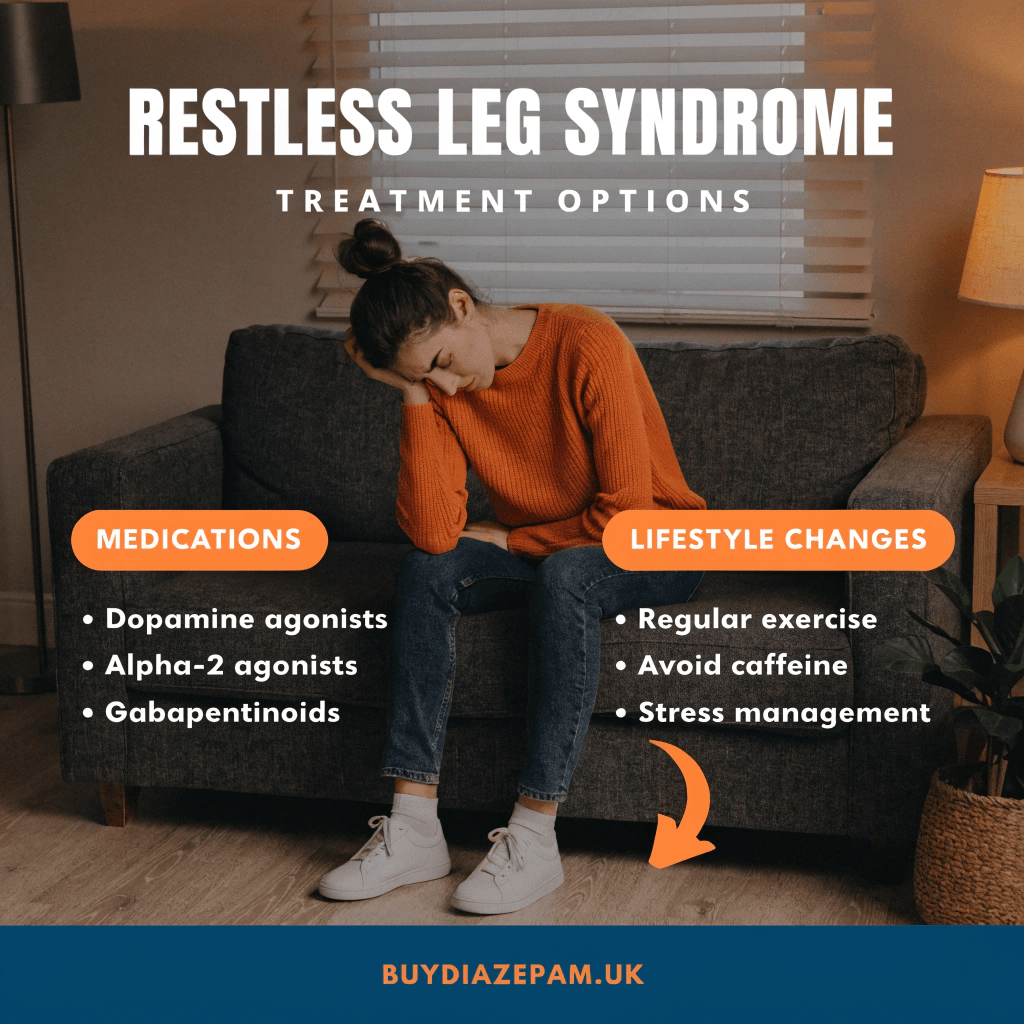
The treatment options of Restless Leg Syndrome involve core medical therapies, lifestyle and self-care approaches, prescription devices, and medications. The treatments for Restless Leg Syndrome are listed below.
- Core Medical Therapies: Core medical therapies mean the primary treatments and prescriptions for restless leg syndrome. It works by providing iron supplementation to the patient and using Alpha-2-Delta ligands.
- Lifestyle and Self-Care Approaches: Lifestyle and Self-Care approaches mean changing daily habits and taking natural remedies to reduce restless leg symptoms. It includes trigger management by doing physical activity, stretching, massage, and warm baths.
- Prescription Devices: Prescription devices mean specialised medical devices recommended by the doctor to reduce restless leg symptoms. It works by tonic motor activation with the devices of vibration pads and foot wraps.
- Medications: Medications are specific pharmaceutical drugs prescribed by the doctor to provide relief from restless leg symptoms. It works by altering the brain neurons by using dopamine agonists, which include medicines like diazepam.
Before starting the treatment for restless leg syndrome, the patient has to consult a medical professional.
Should A Person Consult A Doctor Before Starting RLS Medication?
Yes, a person should consult a doctor before starting RLS medication because an expert’s opinion is very important for proper diagnosis and treatment. A doctor is an expert in monitoring and preventing a medication-related worsening condition called augmentation. Medical consultation is also important to identify any underlying causes, like iron deficiency.
Furthermore, professional guidance is necessary for critical treatments. A doctor might help select appropriate medications like diazepam, gabapentin, or dopamine agonists.
What Are the Best Medications for Restless Leg Syndrome?
The best medications for Restless Leg Syndrome include Diazepam, dopamine agonists, opioids, and gabapentin.
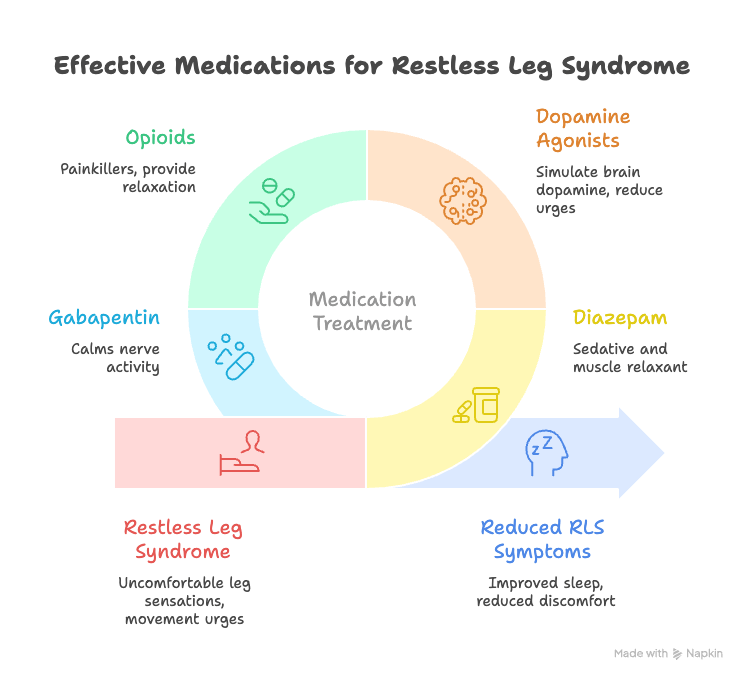
The medications for Restless Leg Syndrome are listed below.
- Diazepam: Diazepam can be considered one of the best medications for restless leg syndrome. It can be used as a sedative and muscle relaxant that helps the patient to sleep.
- Dopamine Agonists: Dopamine Agonists mainly simulate brain dopamine to reduce movement urges. But it is not for long-term use.
- Opioids: Opioids are painkillers that give relaxation to restless leg discomfort.
- Gabapentin: Gabapentin is an alpha-2-delta ligand that calms nerve activity.
Among them, diazepam works best for RLS.
How Does Diazepam Work on Restless Leg Syndrome?
Diazepam works on Restless Leg Syndrome by cooling down the patient’s central nervous system. Its primary role is acting as a sedative and muscle relaxant that helps patients sleep in spite of having the disruptive RLS symptoms.
Its main mechanism is enhancing GABA neurotransmitters to calm the nervous system, reducing waking after sleep onset, and increasing total sleep time. But it doesn’t remove the underlying urge to move the legs. Though diazepam is really effective in treating RLS properly.
How to Buy Diazepam for Restless Leg Syndrome in the UK Safely?
The common ways to buy high-quality diazepam for seizures in the UK are listed below.
- Prescription Medication Providers: Trusted providers who offer certified, factory-sealed strips are a reliable choice. At Buy Diazepam UK, we deliver this with hundreds of satisfied customers.
- Authorized online pharmacies: UK-registered online pharmacies provide diazepam following prescription and safety checks.
- Registered pharmacies: This includes NHS or private pharmacies dispensing diazepam legally with a valid doctor’s prescription.
- Hospital prescription: Hospital doctors supply diazepam during supervised treatment or emergency care.
- GP prescription: A general practitioner assesses symptoms and prescribes diazepam when clinically appropriate.
We are one of the few online stores that provide diazepam in times of emergencies.
Can A Person Buy Diazepam for Restless Leg Syndrome Without A Prescription in the UK and other countries?

No, it is not possible to buy diazepam without prescription unless you find a trusted prescription medicine provider like us. We provide authentic benzos at the best price in the UK with proof of 100+ satisfied customers and certifications.
Diazepam is a powerful Benzodiazepine and Anxiolytic. For its safe medical usage for restless leg syndrome or Willis-Ekbom disease, we still highly recommend a healthcare professional’s supervision. Only the healthcare provider can prescribe this medication, as they are well aware of the types of restless leg syndromes.
But again, in emergencies or for special cases, some online shops like ours may help a person to access diazepam. Patients can find on-demand diazepam dosage in our online store.