
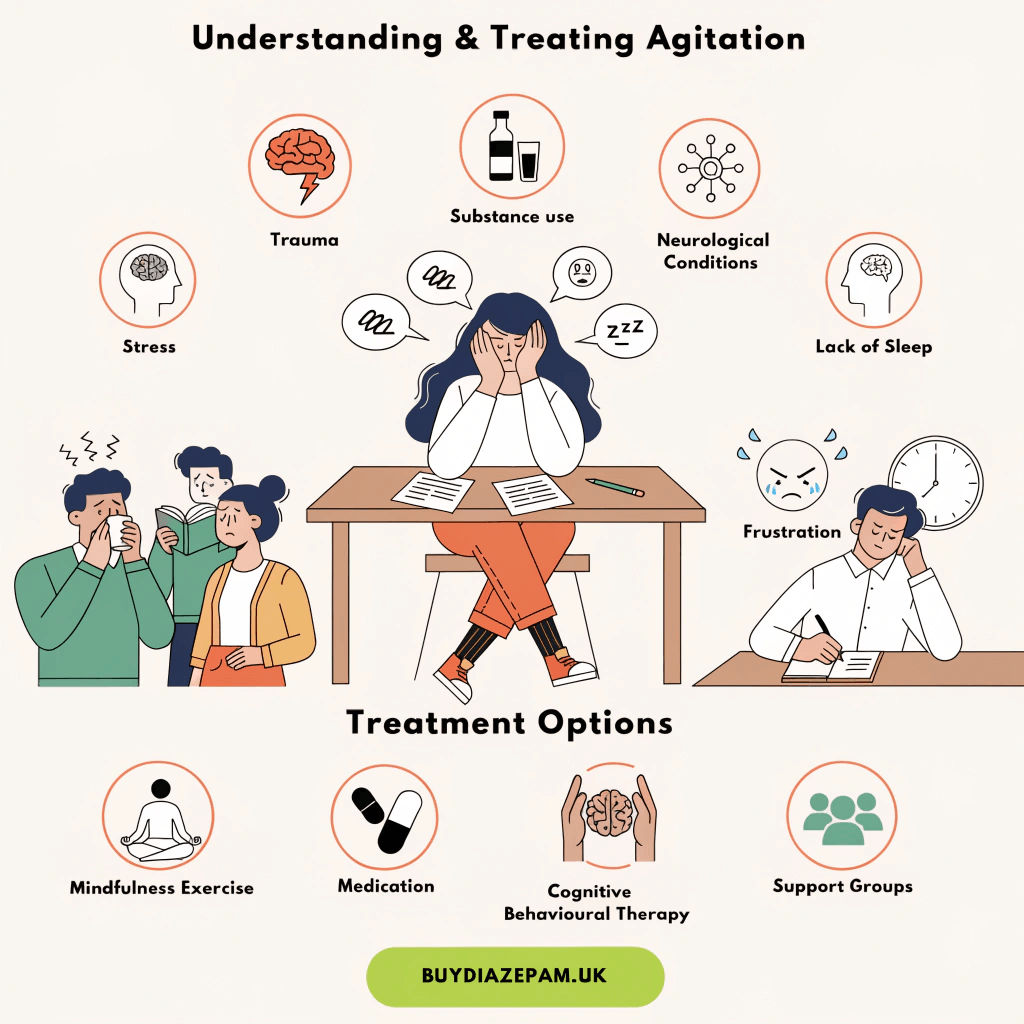
Agitation refers to a state of nervous excitement and psychomotor restlessness. It is affecting up to 70% people worldwide with cognitive decline. The types of agitation include acute agitation and chronic or behavioural agitation. The main symptoms of agitation include emotional, physical, and cognitive disturbances such as irritability, pacing, and racing thoughts.
Some common causes of this include psychiatric conditions, medical and neurological disorders, environmental stressors, and substance-related factors. The main treatments of agitation involve psychotherapy, de-escalation techniques, environmental modification, medication, and lifestyle management.
When it comes to agitation meds, diazepam (a benzodiazepine) is frequently used to manage acute agitation by calming the central nervous system. In the UK, diazepam is a prescription-only controlled drug, typically obtained through a GP, psychiatrist, or regulated online medical service. However, we at Buy Diazepam UK also provide access to 100% verified and legit diazepam in emergency cases.
What is Agitation?
Agitation is a state of psychomotor unrest characterised by excessive motor activity, restlessness, irritability, and internal tension, often reflecting underlying neurological or psychological dysregulation within the central nervous system. According to the International Psychogeriatric Association (IPA) and data published in International Psychogeriatrics, agitation affects approximately 30–50% of patients with dementia, with prevalence estimates ranging from 0.47% to 0.76% in community samples and exceeding 50% in institutional care settings.
According to Dr Scott Zeller, MD, the Chief of Psychiatric Emergency Services at Alameda Health System and Past President of the American Association for Emergency Psychiatry, “Agitation is not a disease in and of itself. It’s actually what we might call a disease state, or just one kind of overall cluster of symptoms. It’s not really designated to any specific psychiatric illness, or even any kind of medical illness. There are a lot of different medical conditions that can cause agitation, as well as illnesses such as bipolar disorder. We also can see it sometimes in schizophrenia and substance abuse disorders. People who have medical conditions like thyroid disease, and any kind of brain trauma, seizure disorders, can all have episodes of agitation.”
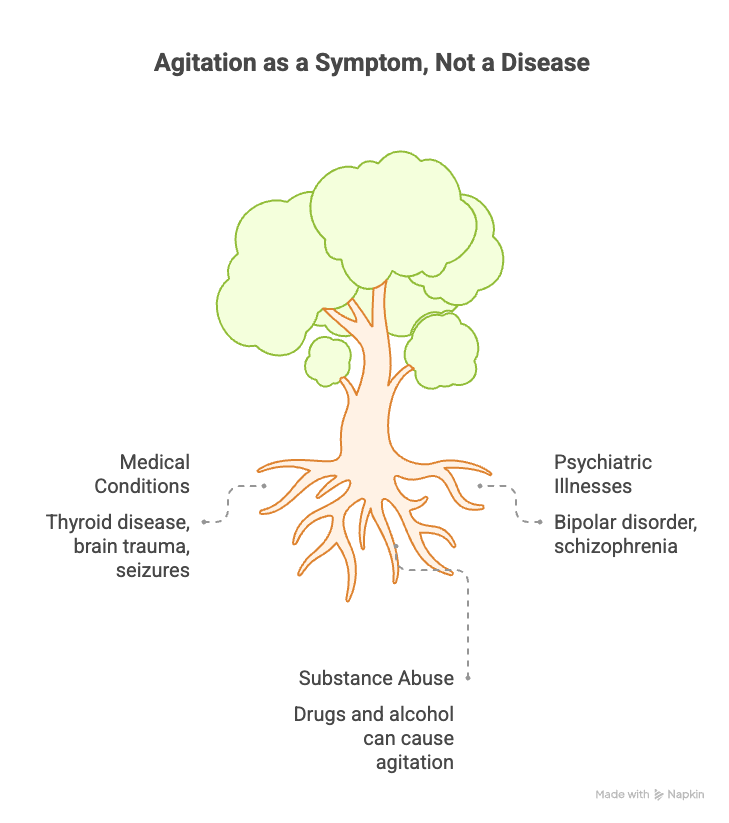
Agitation works by disrupting the normal balance of neurotransmitters, particularly gamma-aminobutyric acid (GABA) and dopamine, within the limbic system and prefrontal cortex, compromising the brain’s capacity to regulate emotion and behaviour. The term psychomotor agitation first appeared in formal medical literature in the 19th century, when clinicians began distinguishing it as a distinct clinical phenomenon separate from broader anxiety and mood disorders, with its current definition codified within the DSM.
What is the History of Agitation?
The history of agitation traces back to the Latin word agitare, meaning “to set in motion,” which appeared as early as the 16th century to describe intense mental deliberation and active inner turmoil. In its earliest use, the concept was largely philosophical and rhetorical, referring to a state of agitated thought or emotional disturbance rather than a clinical condition requiring medical management.
By the 19th century, the meaning had evolved considerably; agitation was employed as a deliberate political strategy to drive public action in social reform movements, whilst simultaneously gaining medical recognition as a form of restless physical behaviour linked to stress, psychological suffering, or neurological conditions.
The different types of agitation, including acute presentations and chronic behavioural patterns, were not formally distinguished until the 20th century, when psychiatric classification systems began to categorise agitation according to its onset, duration, and underlying aetiology, thereby embedding it firmly within modern clinical practice.
What are The Types of Agitation?
The types of agitation include acute agitation and chronic or behavioural agitation.
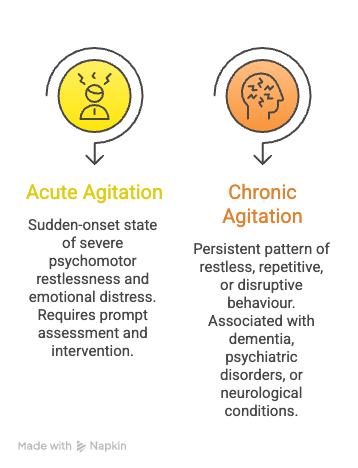
The types of agitation are listed below.
- Acute Agitation: Acute agitation is a sudden-onset state of severe psychomotor restlessness and emotional distress that typically constitutes a medical or psychiatric emergency requiring prompt assessment and intervention.
Acute agitation feels like an overwhelming, uncontrollable surge of internal energy and anxiousness. Individuals report a powerful inability to remain still, intense internal pressure, and heightened emotional reactivity that escalates rapidly without apparent cause.
- Chronic or Behavioural Agitation: Chronic or behavioural agitation is a persistent pattern of restless, repetitive, or disruptive behaviour most commonly associated with dementia, long-term psychiatric disorders, or progressive neurological conditions.
Chronic agitation often manifests as repetitive vocalisation, purposeless movement, and resistance to routine care, with individuals frequently experiencing ongoing confusion and distress without the capacity to identify or communicate the source of their discomfort.
What is The Difference Between Anxiety and Agitation?
The difference between anxiety and agitation is that anxiety is primarily a psychological state involving fear, worry, and nervous tension that does not necessarily produce observable motor disturbance, whilst agitation is a physical state characterised by restlessness, excessive movement, and irritability, functioning as an outward expression of internal distress or an underlying medical condition.
The agitation symptoms, such as pacing, hand-wringing, and repetitive motor movements, distinguish it behaviourally from anxiety; a person experiencing anxiety may appear externally composed whilst enduring intense internal dread, whereas a person experiencing agitation will typically display visible, involuntary motor behaviours that are readily apparent to observers and clinicians alike.
What are The Symptoms of Agitation?
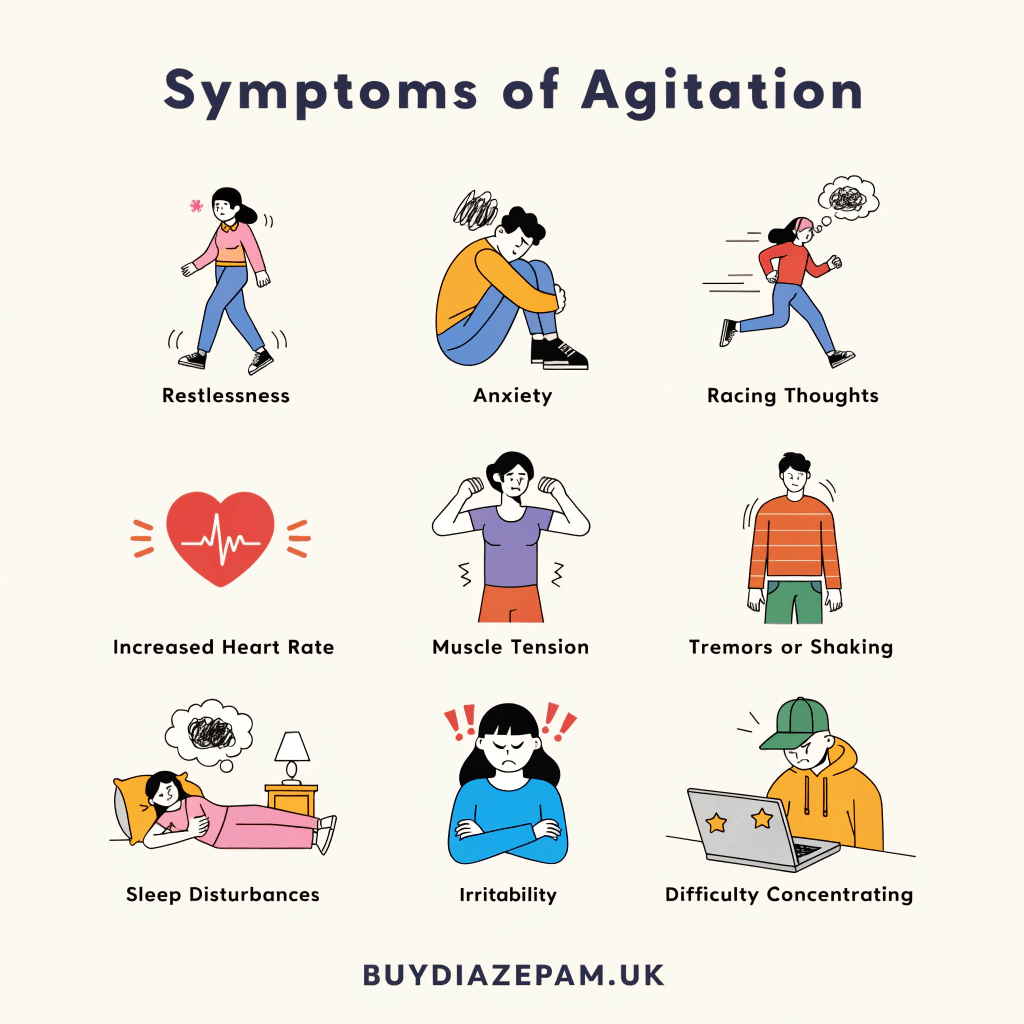
The symptoms of agitation include emotional, physical, and cognitive symptoms.
The symptoms of agitation are listed below.
- Emotional Symptoms: Emotional symptoms of agitation are internal affective disturbances that accompany psychomotor unrest, principally involving heightened irritability, frustration, and anger disproportionate to the triggering event.
These symptoms include sudden mood shifts, an abnormally low threshold for perceived minor provocations, and a reduced capacity for emotional self-regulation, which can escalate to verbal aggression or acute interpersonal distress.
- Physical Symptoms: Physical symptoms of agitation refer to observable motor behaviours, including pacing, generalised restlessness, repetitive hand movements, and shaking legs, that reflect underlying neurological dysregulation of the motor and limbic systems.
These symptoms include an inability to remain seated comfortably, persistent fidgeting, muscular tension, rapid breathing, and excessive or purposeless physical movement that the individual is unable to suppress despite conscious effort.
- Cognitive Symptoms: Cognitive symptoms of agitation refer to disruptions in mental processing that present as racing thoughts, confusion, and poor focus, impairing the individual’s capacity to think clearly and function mentally in daily life.
These symptoms include difficulty sustaining concentration, an inability to maintain a coherent chain of thought, short-term memory lapses, and a pervasive sensation of mental fragmentation or cognitive overwhelm that compounds the overall distress of the episode.
Is Agitation a Mental Illness?
No, agitation is not a mental illness itself because it is a cluster of behaviours indicating an underlying mental, physical, or neurological condition rather than a standalone psychiatric diagnosis in its own right. Agitation is more accurately understood as a symptom or clinical syndrome that emerges across a broad range of associated conditions, including anxiety disorders, bipolar disorder, schizophrenia, dementia, delirium, metabolic disturbances, and traumatic neurological injury.
The causes of agitation are wide-ranging and span multiple clinical domains, which is precisely why agitation must always be evaluated in its full clinical context rather than managed as an isolated disorder without investigation of the underlying aetiology.
What are The Causes of Agitation?
The causes of agitation include psychiatric, medical, neurological, environmental, lifestyle, and substance-related factors.
The causes of agitation are listed below.
- Psychiatric Causes: Psychiatric causes of agitation are mental health conditions that lead to significant psychological distress and psychomotor unrest. These include anxiety disorders, depression, bipolar disorder, and schizophrenia, each of which contributes to agitation through different neurobiological mechanisms. In anxiety disorders, agitation commonly occurs during manic or mixed episodes. In schizophrenia, agitation is often associated with delusional thinking or distressing command hallucinations.
- Medical and Neurological Causes: Medical and neurological causes of agitation are physical health conditions that disrupt brain function or the body’s internal balance. These include dementia, acute infections, hypoglycaemia, urinary tract infections (UTIs), and traumatic brain injury. Agitation in these conditions may result from neurotransmitter dysregulation, cerebral hypoxia, metabolic imbalance, or systemic inflammation, all of which can impair the brain’s emotional regulation.
- Environmental and Lifestyle Causes: Environmental and lifestyle causes of agitation are external stressors and situational factors that overwhelm an individual’s ability to cope. These include chronic psychological stress, unresolved trauma, and exposure to unfamiliar environments that create fear or disorientation. Hospitalisation, institutional care settings, and sudden disruption to daily routines are particularly strong triggers, especially in older adults and individuals with existing cognitive impairment.
- Substance-Related Causes: Substance-related causes of agitation arise from the neurological effects of drug or alcohol withdrawal, acute intoxication, or prolonged stimulant use. These factors disrupt neurotransmitter balance and often require careful clinical assessment before treatment begins. Alcohol withdrawal is one of the most significant substance-related causes because agitation can rapidly progress to seizures. Accurate diagnosis is essential, as treatment often involves benzodiazepines such as diazepam, which differs significantly from the management of psychiatric agitation.
How is Agitation Diagnosed?
The main ways to diagnose agitation are listed below.
- Clinical Interview: A structured clinical interview assesses the onset, severity, context, and personal history underpinning the patient’s agitation presentation.
- DSM-5 Criteria: DSM-5 criteria are applied to determine whether agitation meets the diagnostic threshold for an associated psychiatric or neurocognitive disorder.
- Behavioural Observation Scales: Validated instruments such as the Pittsburgh Agitation Scale or the Cohen-Mansfield Agitation Inventory objectively quantify agitation severity in clinical settings.
- Physical and Neurological Examination: A full physical examination, blood tests, urinalysis, and neuroimaging are conducted to rule out medical causes and evaluate any current neurological injury or systemic disorder.
- Medication and Substance Review: A comprehensive review of current medications and substance use history is performed to identify withdrawal syndromes, intoxication states, or pharmacological contributors.
Proper diagnosis of agitation is very important to cure or overcome agitation.
Are There Any Cures for Agitation?
No, there is no single universal cure for agitation, but it is a highly treatable condition that responds well to targeted and appropriately timed clinical intervention. Agitation is treatable through the systematic identification and management of its underlying causes, the application of evidence-based behavioural strategies, and the use of pharmacological and non-pharmacological interventions tailored to the individual patient’s specific presentation and clinical needs.
Effective management approaches include creating a calm, low-stimulation environment, employing verbal de-escalation and person-centred communication techniques, and, where clinically indicated, administering medications such as sedatives or antipsychotics to reduce symptom severity whilst proper treatment of the root cause is pursued in parallel.
What are The Treatments of Agitation?
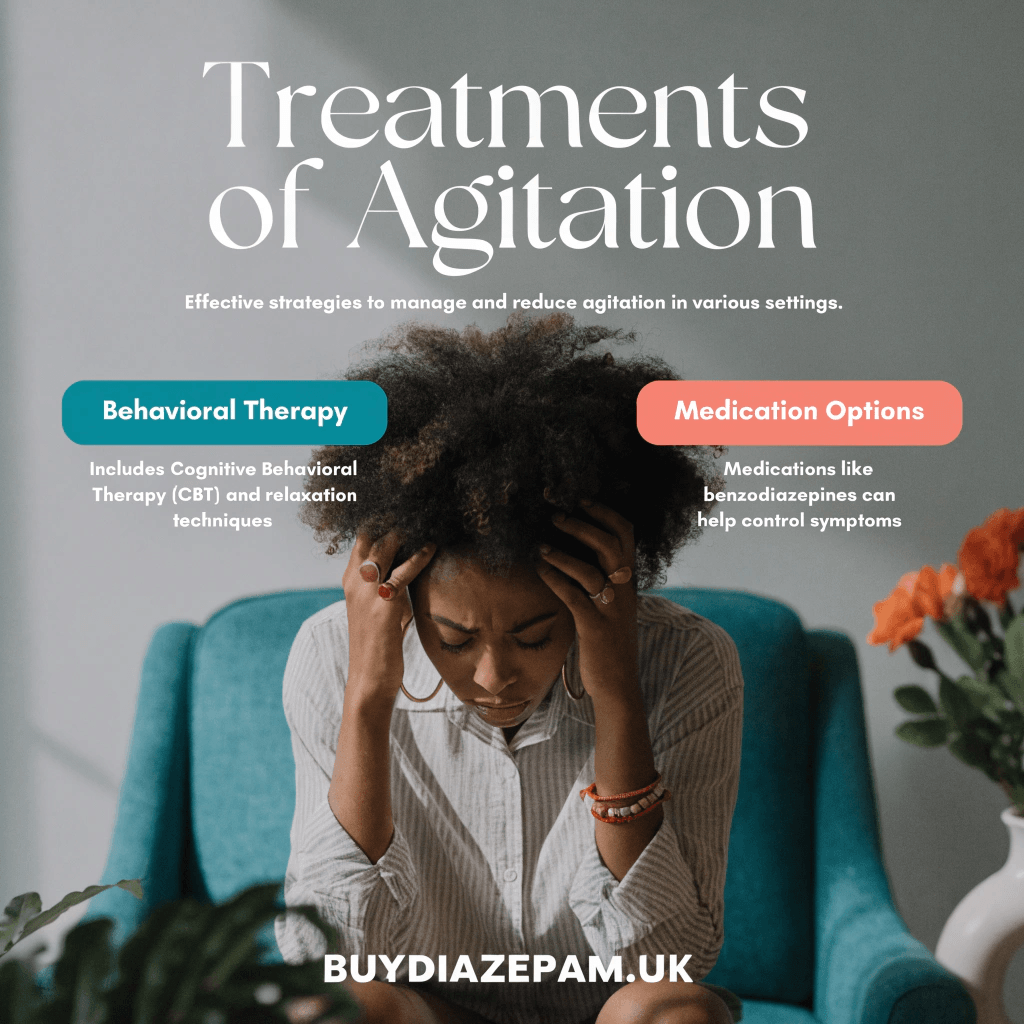
The treatment options for agitation involve a combination of psychological, environmental, pharmacological, and self-management approaches. The treatments of agitation are listed below.
- Psychotherapy: Psychotherapy is a structured, evidence-based therapeutic intervention that addresses the underlying causes of agitation through cognitive, behavioural, or psychodynamic modalities delivered by trained clinicians. Psychotherapy includes structured, evidence-based therapeutic approaches such as cognitive behavioural therapy (CBT), dialectical behaviour therapy (DBT), and supportive counselling. Psychotherapy works by enabling individuals to develop insight into their specific agitation triggers, improve emotional self-regulation skills, and build sustainable coping strategies; it is particularly beneficial for agitation linked to anxiety disorders, trauma, or mood pathology, with the doctor determining the most clinically appropriate approach based on a thorough assessment of the underlying causes.
- De-Escalation Techniques: De-escalation techniques are non-pharmacological, communication-based interventions used to reduce the intensity of acute agitation by addressing the patient’s distress through calm, non-coercive, and empathetic interaction. These techniques involve active listening, maintaining a low and steady tone of voice with adequate physical distance to avoid perceived threat, validating the person’s emotional experience, and offering meaningful choices to restore the individual’s sense of autonomy and control.
- Change of Environment: Change of environment is a therapeutic intervention strategy that involves deliberately altering the physical or social surroundings of an agitated individual to reduce sensory overstimulation and eliminate identifiable external stressors. Moving a person from a noisy, unfamiliar ward to a quieter room, reducing harsh lighting, minimising background noise, or introducing familiar personal objects can significantly diminish agitation. Particularly in patients with dementia or delirium, by directly addressing the doctor-identified environmental underlying causes.
- Medication: Medication for agitation involves the use of pharmacological agents, including benzodiazepines, antipsychotics, and mood stabilisers, prescribed by a doctor on the basis of the identified underlying causes and the clinical severity of the agitation episode. Medication works by modulating central nervous system activity to reduce psychomotor hyperactivity and emotional dysregulation, and it is most effective when used as one component of a broader, holistic, and individually tailored treatment plan.
- Lifestyle and Self-Management: Lifestyle and self-management approaches refer to individual-led strategies that reduce the frequency and intensity of agitation through proactive daily habits and sustained well-being practices. These include a healthy diet, regular aerobic physical exercise, structured sleep hygiene protocols, mindfulness-based stress reduction techniques, limiting stimulant intake, and maintaining consistent daily routines, all of which support neurological stability and meaningfully reduce vulnerability to agitation episodes over time.
Is Seeing a Doctor Necessary Before Taking Agitation Medications?
Yes, seeing a doctor is necessary before taking agitation medications because agitation can arise from a wide range of underlying conditions, and administering the wrong medication without a proper clinical evaluation carries significant and potentially serious health risks.
Medical supervision is required to ensure that the selected medication is pharmacologically appropriate for the specific cause of the agitation, that all contraindications are identified and weighed carefully, and that potentially dangerous interactions with any existing medications are thoroughly excluded before a prescription is issued.
Before prescribing, a doctor evaluates and monitors multiple clinical factors, including the patient’s full medical history, current medication regimen, substance use history, physical examination findings, and cognitive assessment results; ongoing monitoring of therapeutic response, dosage adequacy, and the potential emergence of adverse effects then continues throughout the course of treatment.
What Are the Best Medications for Agitation?
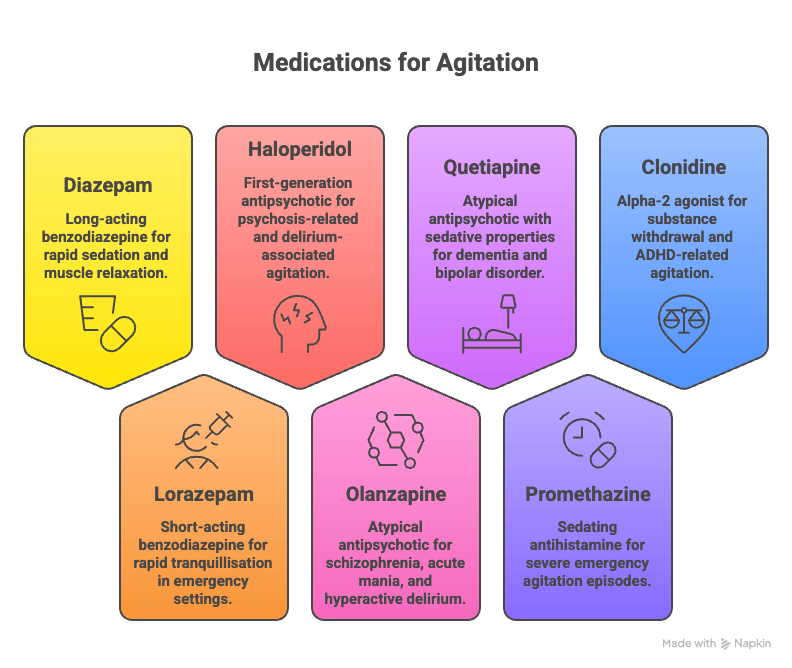
The best medications for agitation include benzodiazepines, antipsychotics, mood stabilisers, antihistamines, and alpha-2 agonists.
The medications for agitation are listed below.
- Diazepam: A long-acting benzodiazepine that enhances GABA-mediated inhibition in the central nervous system, producing rapid sedation, muscle relaxation, and sustained anxiolytic effects in agitated patients.
- Lorazepam: Lorazepam is a short-acting benzodiazepine used for rapid tranquillisation of acute agitation, particularly in emergency psychiatric and medical inpatient settings requiring fast clinical response.
- Haloperidol: Haloperidol is a first-generation antipsychotic that reduces agitation by blocking dopamine D2 receptors, widely used for psychosis-related and delirium-associated agitation.
- Olanzapine: Olanzapine is an atypical antipsychotic that acts across multiple neurotransmitter systems to reduce agitation associated with schizophrenia, acute mania, and hyperactive delirium.
- Quetiapine: Quetiapine is an atypical antipsychotic with notable sedative properties, frequently prescribed for agitation presenting in the context of dementia or bipolar disorder.
- Promethazine: Promethazine is a sedating antihistamine sometimes combined with haloperidol in rapid tranquillisation protocols for severe emergency agitation episodes.
- Clonidine: Clonidine is an alpha-2 agonist that reduces agitation associated with substance withdrawal syndromes and attention-deficit hyperactivity disorder.
Can Diazepam Effectively Calm Agitation?
Yes, diazepam can effectively calm agitation by enhancing GABA-mediated inhibition throughout the central nervous system, reducing neuronal excitability and producing a rapid, clinically reliable anxiolytic and sedative effect. As a benzodiazepine, diazepam works by slowing central nervous system activity, which attenuates both the physiological arousal and psychological distress components of agitation quickly and predictably.
Diazepam is particularly effective for acute agitation related to anxiety disorders or alcohol withdrawal, with oral administration appropriate for moderate presentations and intravenous injection options available for cases requiring the most rapid sedation in acute clinical environments.
What Are the Legal Ways to Buy Diazepam for Agitation in the UK?
The legal ways to obtain or buy diazepam for agitation in the UK are listed below.
- NHS Prescription via GP: A general practitioner can clinically assess the patient and issue a valid NHS prescription for diazepam where the clinical indication is appropriate.
- Private Prescription: A private doctor or consultant psychiatrist can issue a written private prescription following a formal face-to-face or remote consultation and thorough clinical assessment.
- Psychiatrist or Specialist Prescription: A licensed consultant psychiatrist or other relevant specialist may prescribe diazepam as part of a structured, monitored treatment plan for a diagnosed psychiatric condition.
- In-Patient Hospital Administration: Diazepam may be administered directly by registered clinical staff during a hospital inpatient admission for acute agitation or managed alcohol withdrawal.
- Online Services: Some online medical platforms can sell verified, legitimate diazepam.
Can Someone with Agitation Buy Diazepam Without a Prescription in the UK?
No, patients cannot buy diazepam for agitation without a prescription in the UK because diazepam is classified as a Class C, Schedule 4 controlled drug under the Misuse of Drugs Act 1971 and the Misuse of Drugs Regulations 2001, making it a criminal offence to supply or possess it without lawful authorisation.
This legal classification reflects diazepam’s clinically significant potential for physical dependence, tolerance development, and misuse, meaning that any pharmacy or supplier providing diazepam without a valid prescription is acting unlawfully and exposing both parties to serious legal consequences.
However, in genuine medical emergencies or in specific cases, certain medical services or online shops like ours at Buy Diazepam UK facilitate an expedited pathway to purchase diazepam. But still, Individuals experiencing any of the established types of agitation, presenting with recognised symptoms of agitation, or whose condition arises from identifiable causes must seek proper medical assessment. The full range of evidence-based agitation treatments most suitable for their individual presentation can only be safely identified, prescribed, and monitored by a qualified healthcare professional.