
ADHD, also known as Attention-Deficit/Hyperactivity disorder, is a type of medical condition in which the patient struggles to focus. So, this article is important if you are one of those struggling to maintain focus.
The three main types of ADHD are predominantly inattentive ADHD, predominantly hyperactive-impulsive ADHD, and combined presentation ADHD. The main symptoms of ADHD are inattention, hyperactivity, and impulsivity. The common causes of ADHD are genetic factors, brain structure and function, environmental influences, neurotransmitter imbalances and birth and perinatal complications.
The main treatments include Behavioural therapy, parent training, school and workplace support, stimulant medications and non-stimulant medications. In many cases, a prescription medicine named Diazepam works by temporarily reducing the co-occurring symptoms of ADHD.
However, in the UK and most other countries, access to diazepam and other benzodiazepines is tough without a prescription from your doctor. We offer the opportunity to buy ADHD medicines with an international shipping facility outside the UK in times of emergency. Let’s keep reading on to know more.
What is Attention-Deficit/Hyperactivity Disorder or ADHD?
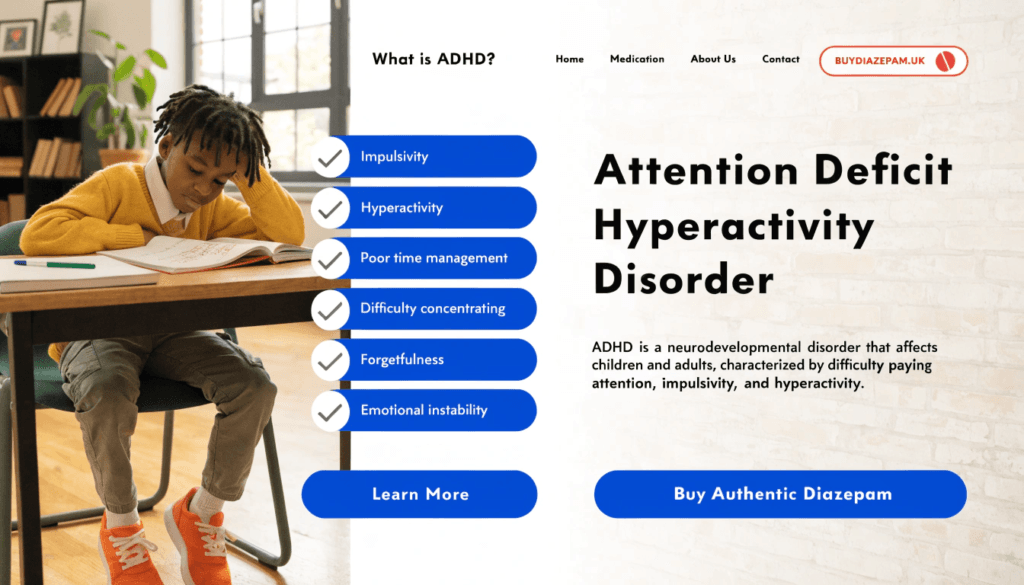
Attention-Deficit/Hyperactivity Disorder, or ADHD, is a chronic neurodevelopmental condition. In such cases, patients would face the characteristics of executive dysfunction, inattention, and atypical hyperactivity that significantly impair daily functioning.
According to NHS England data, ADHD prescriptions rose 18% yearly since COVID. It reached 41.55 per 1,000 people by 2023-24, amid over 549,000 on waiting lists. According to Dr Russell Barkley, “ADHD is not a disorder of knowing what to do; it’s a disorder of doing what you know.”
ADHD works through typical dopamine and norepinephrine neural networks. In other words, it works with the delayed maturation of the brain’s prefrontal cortex. It is mainly classified as a neurodevelopmental disorder in the DSM. ADHD was first mentioned in ancient Greece around 400 BC.
What is the History of ADHD?
The history of ADHD is more about Hippocrates in ancient Greece (around 400 BC). It first caught the attention of the curious people of that time. The earliest reference attributed to it described patients having similar symptoms to ADHD, such as quick responses and less tenacity.
Symptoms of inattention and hyperactivity have been recognised for over 250 years. However, modern terminology and diagnosis developed much later. From the medical studies of Sir Alexander Crichton in 1798, he characterised this as a disease of attention. Now we can see that there are many types of ADHD.
What are The Types of ADHD?
The types of ADHD include predominantly inattentive ADHD, predominantly hyperactive-impulsive ADHD, and combined presentation ADHD. The types of ADHD are listed below.
- Predominantly Inattentive ADHD: Predominantly Inattentive ADHD means that the patient has deficits in sustained attention, working memory and proper organisation. It also involves the absence of overt hyperactive motor behaviours. It feels like a constant cognitive dysfunction, often leading to exhausting ADHD camouflaging to hide the daily struggle of losing focus.
- Predominantly Hyperactive-Impulsive ADHD: Predominantly Hyperactive-Impulsive ADHD means excessive motor activity and impaired inhibitory control that is mainly driven by altered striatal dopamine regulation. It feels like being driven by an unstoppable motor activity. In children, it is physical outward restlessness, but internalised agitation in an adult.
- Combined Presentation ADHD: Combined Presentation ADHD means that the patient has clinically significant thresholds for both inattentive and executive dysfunction and hyperactive-impulsive neurological behaviours simultaneously. It feels like overwhelming internal chaos within the patients where they have racing thoughts, and restlessness collide, frequently triggering severe anxiety because of constant overstimulation.
The types of ADHD are predefined. But still, people confuse them with other diseases.
What is The Difference Between Anxiety and ADHD?
The difference between anxiety and ADHD is that the first one arises due to excessive fear and worry, whereas the second is a developmental disorder of the brain concerning focus and self-control issues.
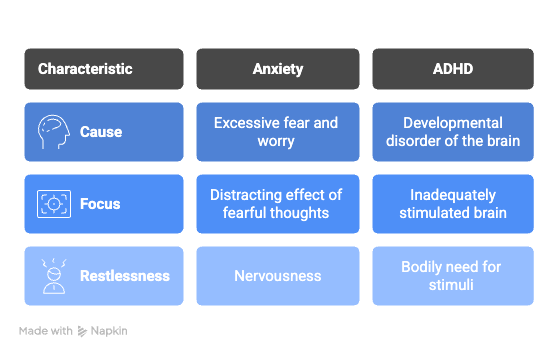
These two are also entirely different when it comes to the cause. For ADHD, inability to pay attention or avoidance of activities results from an inadequately stimulated brain. While anxiety, it is caused by the distracting effect of fearful thoughts. Just like in ADHD, restlessness is a result of bodily need for stimuli in anxiety, but here it is nervousness.
Due to the striking similarity between the symptoms of both disorders, another misunderstanding that exists is ADHD versus autism.
What is The Difference Between Autism and ADHD?
The difference between autism and ADHD is that autism primarily affects social communication and sensory integration, while ADHD affects executive functioning, attention, and impulse control.
Although these conditions may have similar symptoms, such as restlessness and social incompetence. The behaviour in people with ADHD is caused by impulsive behaviour and a search for excitement. While actions of people with autism occur as a means of relaxation because they cannot interpret typical social cues. Furthermore, people with ADHD yearn for new sensations, while those with autism crave regularity.
Since their external characteristics may be identical, misdiagnoses are common. Another misunderstanding lies in the confusion between ADHD and ADD, which is not a disorder in itself but an old medical terminology for inattentive ADHD.
What is The Difference Between ADD and ADHD?
The main difference between ADD and ADHD is that ADD means Attention Deficit Disorder, and ADHD means Attention-Deficit/Hyperactivity Disorder.
Although their root cause is from the same neurological reason in brain chemistry and executive function, the medical community categorised them differently due to different symptoms. People often use the term ADD to refer predominantly to the inattentive type of ADHD. These symptoms include struggling to focus, stay organised, and remember things.
What are The Symptoms of ADHD?
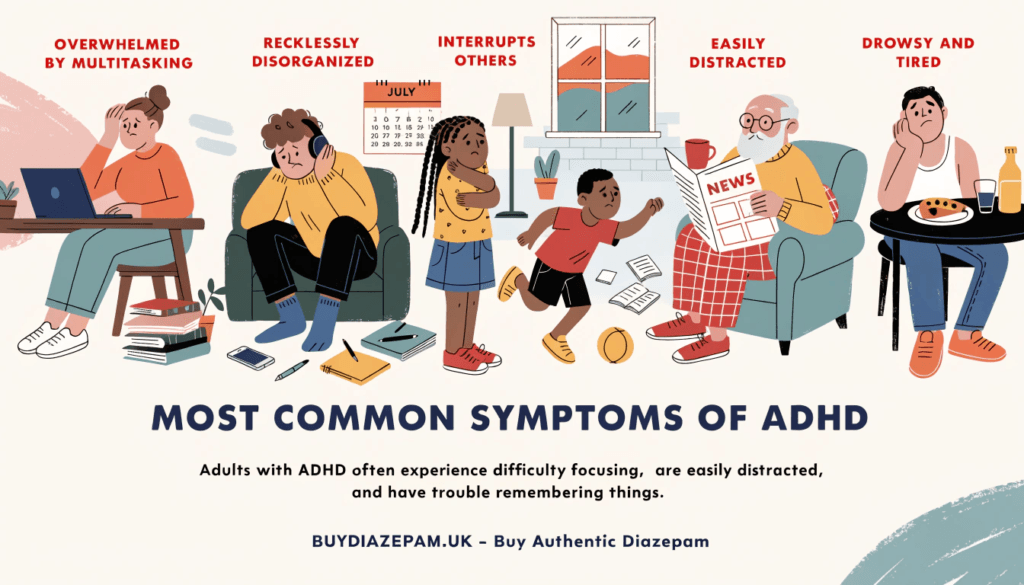
The symptoms of ADHD include inattention, hyperactivity, and impulsivity. The symptoms of ADHD are listed below.
- Inattention Symptoms: Inattention symptoms occur when patients have an attention deficit resulting in an inability to maintain focus, organise tasks, or do regular tasks effectively. This includes making careless mistakes, losing important things, and failing to finish tasks, which are symptoms seen in the daily life of an ADHD patient.
- Hyperactivity Symptoms: Hyperactivity symptoms mean excessive physical movement and physiological restlessness occurring from atypical dopaminergic arousal and delayed cortical maturation. This includes constant movements in places and an inability to remain seated. It entails continuous movements both in space and an incapacity to stay seated. It is expressed as overt activity in children with ADHD and internal restlessness in adults with ADHD.
- Impulsivity Symptoms: The impulsivity symptom is when the patient makes quick or fast responses, which are carried out without adequate planning, brought about by malfunctions in the brain’s inhibitory control network. This includes answering questions quickly, interrupting others while speaking, and the inability to take turns.
Other than the general symptoms, there are differences between symptoms for adults and children.
What Are the Differences in ADHD Symptoms Between Children and Adults?
The differences in ADHD symptoms between children and adults involve a change of behavioural expression that is more hidden as adults grow.
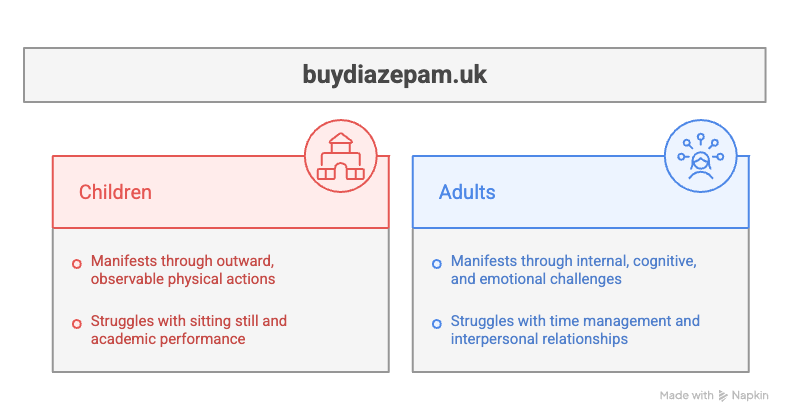
Children mostly show the symptoms as outward behaviours. This includes kids who often deal with obvious hyperactivity, impulsivity, difficulty sitting still, and trouble with schoolwork. The adults mostly show the symptoms as more internal challenges. This includes restlessness, disorganisation, poor time management, emotional regulation issues, and struggles in work or relationships. Sometimes this condition is mistaken for another kind of mental illness. But it should be properly classified.
Is ADHD a Mental Illness?
Yes, ADHD is considered a mental illness, but it is more specifically classified as a neurodevelopmental disorder.
ADHD is categorised as a neurodevelopmental disorder rather than only a general mental illness. This gives a better picture of what it really is. It is not just a mood problem or condition that happens later in life because of chronic stress. Using a proper term to address ADHD is really important because the causes of ADHD are tied to your genetics and how your brain grows when you are a child.
What are The Causes of ADHD?
The causes of ADHD include genetic factors, brain structure and function, neurotransmitter imbalances, and birth and perinatal complications. The causes of ADHD are listed below.
- Genetic Factors: Genetic factors mean the inherited genomic sequences in the patient’s body, specifically in the dopaminergic system, that increase the possibility of ADHD.
- Brain Structure and Function: Brain structure and function refer to brain structures that delay development due to unique volume differences. It also involves structural damage to top-down inhibitory executive network systems and brain function.
- Neurotransmitter Imbalances: Neurotransmitter imbalances mean atypical monoamine messaging, leading to an imbalance in the amount of dopamine. It also involves dysregulation of brain chemistry and chronic hyperactive behaviour due to dopamine reuptake.
- Environmental Influences: Environmental influences mean non-genetic risk factors that trigger oxidative stress, leading to epigenetic modification of neural circuitry during fetal brain cell generation.
- Birth and Perinatal Complications: Birth and Perinatal complications mean harmful pregnancy experiences and traumatic injuries like hypoxia, which can cause irreversible interference with early synaptic pruning and structural myelination.
Other than the causes, ADHD affects both adults and children.
How Does ADHD Affect Adults?
The ways ADHD affects adults are listed below.
- Executive Dysfunction: Executive dysfunction means that adults experience persistent, structural deficits in prefrontal cortex-mediated functions. It includes tasks with working memory and task prioritisation. It also directly impairs work productivity through chronic procrastination.
- Internalised Hyperactivity: Internalised Hyperactivity means outward physical hyperactivity that evolves into profound internal restlessness for adults. This psychological agitation is fundamentally different from that of children.
- Emotional Dysregulation: Emotional Dysregulation means altered connectivity between the amygdala and the prefrontal cortex. It results in significant deficits in emotional self-regulation.
- Gender-Based Phenotypic Variances: The clinical presentation of adult ADHD frequently diverges based on biological gender. The behaviours vary from man to woman.
Even though ADHD is problematic for adults, it affects children more.
How Does ADHD Affect Children?
The ways ADHD affects children are listed below.
- Delayed Cortical Maturation: The cortical maturation is delayed due to the disorder of ADHD. It causes neural problems later in life.
- Academic Underachievement: Children suffer from working memory deficits that significantly reduce their ability to acquire knowledge, resulting in academic downfall.
- Social Peer Rejection: Children face social peer rejection as their brains’ neural signalling does not work like a normal person.
The earlier ADHD is diagnosed, the better it is for children.
How is ADHD Diagnosed?
The main ways to diagnose ADHD are listed below.
- Clinical Interviews: Clinical interviews mean that the doctors thoroughly examine the specific DSM-5 criteria across multiple life settings to achieve an accurate diagnosis.
- Behavioural Rating Scales: Behavioural Rating scales are standardised questionnaires to assess the frequency and severity of core symptoms in adults and in children.
- Medical History Review: Medical history review means doctors rule out other medical conditions to focus on long-term symptom management rather than simply curing.
- Collateral Feedback: Collateral feedback means clinicians gather information about the patient from teachers, family, or partners to evaluate cross-situational behavioural patterns.
Although ADHD is diagnosed properly, there is no permanent cure for this.
Are There Any Cures for ADHD?
No, there is no permanent cure for ADHD because it is a neurodevelopmental condition. Even though there is nothing to fear. It is not a temporary illness but a lifelong condition for most people.
It can be properly managed through a combination of medication, therapy, and lifestyle changes, while some children may even see their symptoms improve over time. Even though there are no permanent solution but, doctors can surely maintain proper treatment for the patient.
What are The Treatments of ADHD?
The treatment options of ADHD involve Behavioural Therapy, Parent Training, School and Workplace Support, Stimulant Medications, and Non-Stimulant Medications. The treatments for ADHD are listed below.
- Behavioural Therapy: Behavioural therapy means psychological intervention which helps patients learn coping skills and strategies, without getting to the root cause of their problem. This type of therapy focuses on reinforcing positive behaviour and identifying harmful thought patterns. The advantage of this kind of therapy is that it enables the individual to acquire social and organisational skills.
- Parent Training: Parent Training Therapy means training parents to adopt particular methods of rewarding and punishing behaviours. This form of treatment succeeds when parents are trained on how to apply an organised reward and punishment system within their homes. It serves the purpose of avoiding conflicts between parents and children, and thus benefits the individual through positive neurodevelopmental outcomes.
- School and Workplace Support: Support in the School/Work Setting means accommodation through an adequate plan or education that will lead to an appropriate environment. It is achieved through changes in the environment itself, either physically or operationally, such as giving more time to complete tasks or creating quiet places for working. This support will aid in eliminating immediate obstacles to executive functioning, enabling individuals to demonstrate their true potential without being burnt out.
- Stimulant Medications: Stimulant Medications are medications that have a rapid effect, issued by a physician, which quickly increases the amount of dopamine in the brain, thus enabling an improvement in concentration. The medication acts by inhibiting the reuptake of the neurotransmitter in the prefrontal cortex. The medication acts by giving the under-stimulated nervous system the stimulation that it requires, thus offering the benefit of decreased impulsiveness, hyperactivity, and attentiveness.
- Non-Stimulant Medications: Non-Stimulant Medications mean drugs other than conventional stimulants, which work on pathways of norepinephrine to provide an effective treatment option. Its mode of action involves selectively sustaining levels of neurotransmitters for an extended duration of time. The benefit offered includes improved mood and concentration for 24 hours, especially for those who face strong reactions to conventional drugs.
Before taking any kind of treatment for ADHD, the patients should consult a medical professional.
Is Seeing a Doctor Necessary Before Taking ADHD Medications?
Yes, seeing a doctor is necessary before taking ADHD medications because these drugs directly alter the brain’s chemical balance. Self-medication with wrong doses can be lethal.
Medical supervision in this case is really important as the doctor performs a comprehensive neurological evaluation and reviews the whole medical history. Because there may be underlying conditions similar to ADHD, causing inattention, impulsivity, restlessness or psychological issues.
Once treatment begins, ongoing monitoring is essential. Doctors monitor dosage, duration, side effects, and manage withdrawal risks if the drug needs to be stopped. Because tolerance and dependency can develop in the case of ADHD, professional monitoring helps prevent misuse.
What Are the Best Medications for ADHD?

The best medications for ADHD include diazepam, primary stimulants and non-stimulant alternatives. The medications for ADHD are listed below.
- Diazepam: Diazepam is an instant drug occasionally prescribed together with the primary medications for addressing anxiety. By reducing anxiety, ADHD can be treated well.
- Stimulants: Stimulants are very successful primary drugs that increase the levels of neurotransmitters like dopamine and norepinephrine. This type of medication quickly improves attention and focus.
- Non-stimulants: Non-stimulants are additional medications that act on norepinephrine, stabilising attention. It avoids any usual side effects of primary stimulants.
For instant relief, diazepam might be the best option.
Can Diazepam Be Used to Help Manage ADHD Symptoms?
Yes, diazepam can be used to help manage ADHD symptoms because it can effectively reduce severe co-occurring anxiety that often worsens an individual’s daily struggles.
Diazepam works by enhancing the activity of gamma-aminobutyric acid (GABA), an inhibitory neurotransmitter. It rapidly increases the calmness of the overactive central nervous system. But diazepam has to be taken under the supervision of a medical professional. It can be consumed for short-term usage only, as it is not a primary long-term medication for ADHD itself.
What Are the Legal Options for Buying Diazepam for ADHD in the UK?
The approved ways to get diazepam for ADHD in the UK are listed below.
- GP Consultation: A registered GP assesses ADHD symptoms and may issue a prescription for a short course of diazepam where clinically appropriate.
- NHS Hospital Outpatient: In acute hospital settings, a consultant or emergency physician may prescribe diazepam for severe ADHD symptoms under direct supervision.
- Private Medical Consultation: A licensed private doctor may issue a valid prescription following a face-to-face or regulated online clinical consultation.
- Regulated Online Pharmacy with Prescription: A CQC-registered online pharmacy may dispense diazepam upon receipt of a valid UK prescription, following clinical review by a registered prescriber.
We provide high-quality diazepam in emergencies.
Is It Possible to Buy Diazepam for ADHD in the UK Without a Prescription?
No, patients cannot directly buy diazepam for ADHD without a prescription in the UK because it is a controlled Schedule 4 drug due to the high chance of misuse. And there are a lot of fake sellers who supply counterfeit meds. So, it’s always better to stay aware and rely on trusted suppliers like us to buy diazepam or benzodiazepines with next-day delivery.
To ensure proper treatment for ADHD, the supervision of a medical professional is important. Because they can do evidence-based ADHD treatments, considering the types of ADHD, the symptoms of ADHD, and the causes. But in emergencies, we are one of the few online shops that can help a person with urgent delivery.