In the United Kingdom, around 50% of alcohol consumers experience alcohol withdrawal in their lifetime. Alcohol withdrawal can become a serious medical condition that can be caused by sudden alcohol cessation.
The main symptoms of alcohol withdrawal are anxiety, insomnia, nausea, sweating, hallucinations, etc. The general timeline of alcohol withdrawal is usually 3 to 10 days. The symptoms exponentially increase after 48 to 72 hours of the last drink. The main treatments for it are medical detox, medications, and supportive care.
The main medicines for alcohol withdrawal are diazepam, lorazepam, chlordiazepoxide, and phenobarbital. Diazepam mainly works on alcohol withdrawal by rapidly reducing the effects of alcohol in the central nervous system. In the UK, Anxiolytics like diazepam medicines are usually bought after a healthcare provider’s prescription.
What is alcohol withdrawal?
Alcohol Withdrawal or Alcohol Syndrome or AWS is a potentially life-threatening clinical condition in which the patient suddenly stops consuming alcohol. It can cause intense physical and mental harm due to CNS hyperexcitability.
According to UK‑linked clinical data, about 1.8% of people with Alcohol Use Disorder develop physical dependence when stopped drinking, and roughly 12% are in higher‑risk groups. According to Dr. Anna Lembke, “Every pleasurable experience is followed by an equal and opposite experience of pain. You have an overwhelming urge to drink just to restore homeostasis, and restoring homeostasis is one of the fundamental drives of the human brain.”
The main differences between epilepsy and alcohol withdrawal are that epilepsy is a chronic neurological disorder with unprovoked seizures. On the other hand, alcohol withdrawal is an acute, provoked event influenced by sudden alcohol cessation. Alcohol withdrawal mainly works by creating a glutamate imbalance, physical dependence, and kindling effect. It is because alcohol creates a neuroadaptation in the central nervous system by artificially enhancing the GABA receptors.
Why Does Alcohol Withdrawal Syndrome Happen?
Alcohol withdrawal syndrome happens because of the sudden cessation of the constant alcohol exposure of the central nervous system. The brain cannot take the sudden change in the neural pathways and declines.
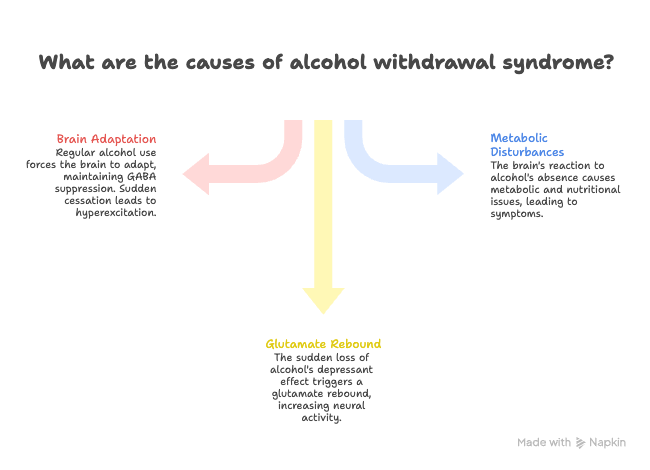
Regular alcohol consumption forces brain adaptation that maintains a functional baseline of GABA suppression. But when suddenly drinking is stopped, the sudden loss of depressant effect makes the central nervous system hyperexcited. It also triggers a huge glutamate rebound. Lastly, the main reason for symptoms is the brain’s reaction to the sudden absence of alcohol that creates metabolic and nutritional disturbances.
To take necessary precautions, it is important to know the symptoms of alcohol withdrawal.
What are The Symptoms of Alcohol Withdrawal?
The symptoms of alcohol withdrawal are mainly classified as mild symptoms, moderate symptoms, and severe symptoms. The symptoms of Alcohol withdrawal are listed below.
- Mild Symptoms: Mild symptoms mean the starting discomfort during the early alcohol withdrawal duration. Mild symptoms mainly include mild anxiety, insomnia, minor tremors, light sweating, and slight nausea. According to Dr. Drew Pinsky, “The early hours of detox are heavily psychological; patients experience overwhelming anxiety and physical restlessness as the brain’s sedative is suddenly removed.”
- Moderate Symptoms: Moderate symptoms mean a rapid worsening of the physiological response. Moderate symptoms include physical distress, hypertension, elevated heart rate or tachycardia, and bodily discomfort. According to Dr. Kevin McCauley, “The autonomic nervous system goes into overdrive during this phase, causing alarming spikes in blood pressure and pulse that require medical supervision.”
- Severe Symptoms: Severe symptoms mean the life-threatening neurological signs of emergency when the patient needs immediate medical attention. Severe symptoms include seizures, auditory or visual hallucinations, and Delirium Tremens. According to Dr. Anna Lembke, “Severe withdrawal can progress to Delirium Tremens and seizures, which are acute medical emergencies with a significant mortality rate if left untreated.”
Along with the symptoms, the information on its duration would be helpful to treat withdrawals well.
How Long Does Alcohol Withdrawal Syndrome Last?
Alcohol withdrawal lasts between 3 days and more than a week in the primary phase. Most physical symptoms last between 3 and 10 days, depending on the severity, drinking history, age, and overall health condition.
Severe cases can last longer than a week, and psychological symptoms like anxiety or cravings may continue for weeks or months. However, this timeline can vary person to person. Mainly, the timeline changes depending on the patient’s surrounding situation and other factors.
This whole duration of alcohol withdrawal is divided into a specific timeline.
What is the Timeline of Alcohol Withdrawal?
The stages of Alcohol Withdrawals include Stage 1 (6–12 Hours), Stage 2 (12–48 Hours), and Stage 3 (48–72+ Hours). The stages of alcohol withdrawal are listed below.
- Stage 1(6-12 Hours): Stage 1 means the starting physical reaction to alcohol cessation. Stage 1 lasts between 6 and 12 hours. The symptoms of Stage 1 include mild anxiety, nausea, and tremors.
- Stage 2(12-48 Hours): Stage 2 means the pre-breakdown of the central nervous system. Stage 2 lasts between 12 and 48 hours. The symptoms of Stage 2 include hallucinations, sweating, and tachycardia.
- Stage 3(48-72+ Hours): Stage 3 means a life-threatening emergency with various risk factors. Stage 3 lasts between 48 and 72+ hours. The symptoms of Stage 3 include severe seizures and delirium.
In each stage, several risk factors can trigger alcohol withdrawal.
What are The Risk Factors of Alcohol Withdrawal?
The risk factors of Alcohol Withdrawal include heavy alcohol use, age, history of seizures, and co-existing health conditions.
The risk factors of Alcohol Withdrawal are listed below.
- Heavy alcohol use: Heavy alcohol use means drinking large amounts of alcohol regularly. It increases the risk of severe withdrawal.
- Age: Older adults, usually over 65, have weaker organs that cannot handle the severity of withdrawals.
- History of seizures: If the patient has a history of seizures, then it increases the risk of having withdrawal.
- Co-existing Health Conditions: Co-existing health conditions mean having heart, liver, or neurological diseases. It increases the chance of having withdrawals.
Knowing the risk factors may help to diagnose alcohol withdrawal syndrome.
How to Diagnose Alcohol Withdrawal Syndrome?
The ways to diagnose Alcohol Withdrawal include CIWA-Ar Scale, hospital monitoring, scoring, and detox. The best ways to diagnose alcohol withdrawal are listed below.
- CIWA-Ar Scale: The CIWA-Ar Scale is a method of medical testing that helps measure the intensity of withdrawal symptoms effectively.
- Scoring: Scoring means evaluating the symptoms of the withdrawal syndrome on the CIWA-Ar scale.
- Hospital monitoring: Hospital monitoring means monitoring the critical symptoms in a medical setup to identify any serious conditions.
- Detox: Detox means evaluating the health status of the individual to undertake the detoxification program safely.
Even when alcohol withdrawal is diagnosed, the patient should not detox from alcohol at home without supervision.
Can Someone Detox From Alcohol at Home?
No, detoxing from alcohol at home is not recommended because it can be dangerous to try without a professional’s supervision. Alcohol withdrawal can be dangerous, especially for people with moderate to severe symptoms.
Trying this at home can be fatal. Without clinical monitoring, these sudden changes can lead to severe medical emergencies. These situations can cause extreme dehydration and seizures. So, medically supervised detox or a professional treatment program is recommended.
Is Withdrawal Life‑threatening?
Yes, alcohol withdrawal can be life-threatening because the sudden change has a negative impact on the body. Alcohol withdrawal can create severe complications in the body, such as seizures, delirium tremens, heart problems, or electrolyte imbalances.
According to the research data from the National Center for Biotechnology Information (NCBI), delirium tremens can carry a mortality rate of up to 5–25% without proper medical care. So, it is necessary to know when to seek medical help for alcohol withdrawal symptoms.
When to Seek Immediate Medical Help for Alcohol Withdrawal Syndrome?
You should seek immediate medical help for alcohol withdrawal syndrome, even if you are feeling slight discomfort. Because later the symptoms can become life-threatening. The severe and life-threatening symptoms are seizures, hallucinations, or delirium tremens.
For alcohol withdrawals, urgent care is critical because these complications can be life-threatening and require prompt medical treatment. The patient should not wait for the symptoms to heal on their own. Things get complicated later.
As soon as the patient seeks help, the medical professionals may start the treatment procedure.
What are The Treatments for Alcohol Withdrawal?
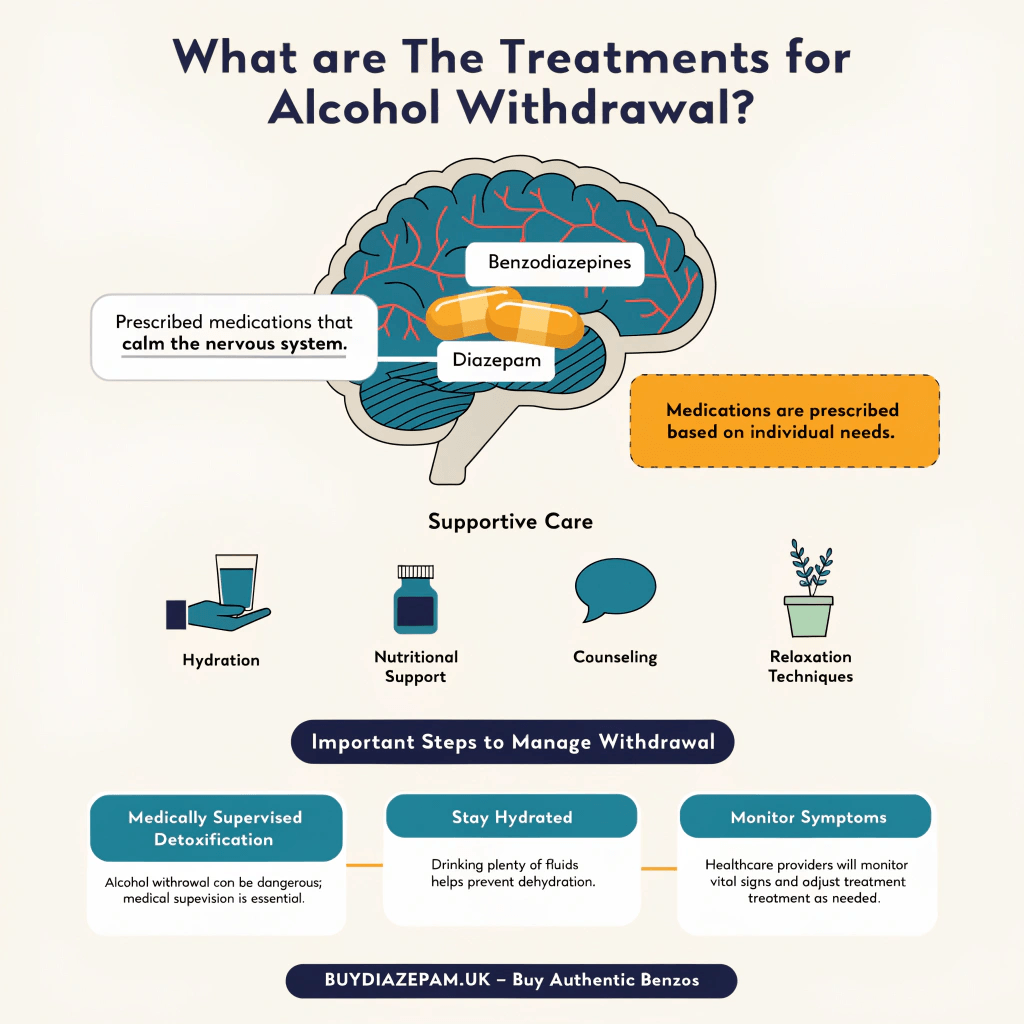
The treatments for Alcohol Withdrawal include medical detox, medications, and supportive care. The treatments for Alcohol Withdrawal are listed below.
- Medical Detox: Medical Detox means managing the patient’s withdrawal symptoms under a medical professional’s supervision. Medical Detox includes 24/7 monitoring, tracking the vital signs, and immediate attention to prevent severe neurological complications. According to Dr. Kevin McCauley, “Medical detox is not the treatment for addiction itself, but rather the crucial medical stabilization phase required to keep the patient alive during withdrawal.”
- Medications Used: Medications used means using various kinds of medicines that stabilize the brain chemistry and prevent seizures. Medications used include Benzodiazepines like Diazepam, alongside adjunct medications to manage specific other symptoms of alcohol withdrawal. According to Dr. Drew Pinsky, “Benzodiazepines are the gold standard for alcohol withdrawal because they act on the same receptors as alcohol, safely tapering the brain down without the toxicity.”
- Supportive Care: Supportive care means using factors other than medications or treatments to restore physical health. Supportive Care includes IV Hydration, a calm environment, Thiamine usage, and nutritional support. According to Dr. Anna Lembke, “Beyond medications, patients need intensive supportive care, particularly high-dose thiamine, to prevent permanent neurological damage like Wernicke-Korsakoff syndrome caused by chronic alcohol depletion.”
There are several medications for alcohol withdrawal, including diazepam.
What Are the Best Medications for Alcohol Withdrawal?
The best medicines for Alcohol Withdrawal include diazepam, lorazepam, chlordiazepoxide, and phenobarbital. The medications for alcohol withdrawal are listed below.
- Diazepam: Diazepam is a rapid-relief benzodiazepine medicine that is used to calm the central nervous system. It is used to prevent seizures during detox.
- Lorazepam: Lorazepam is a short-acting benzodiazepine medication that is used in older patients. It is mainly used to tackle the acute symptoms of alcohol withdrawal.
- Chlordiazepoxide: Chlordiazepoxide is a long-acting medicine that is highly effective for preventing severe withdrawal symptoms in patients.
- Phenobarbital: Phenobarbital is a medication that is used instead of benzodiazepines in severe cases of seizures to enhance GABA activity.
How Does Diazepam Work in Alcohol Withdrawal?
Diazepam works on Alcohol Withdrawal, and it works by safely reducing the effects of alcohol on the central nervous system. It is to prevent life-threatening neurological complications.
When alcohol is suddenly removed, the brain starts a dangerous level of hyper-excitability. Diazepam works in the brain by enhancing the effects of a specific receptor called GABA (gamma-aminobutyric acid). It is the main inhibitory neurotransmitter that calms excessive electrical activity.
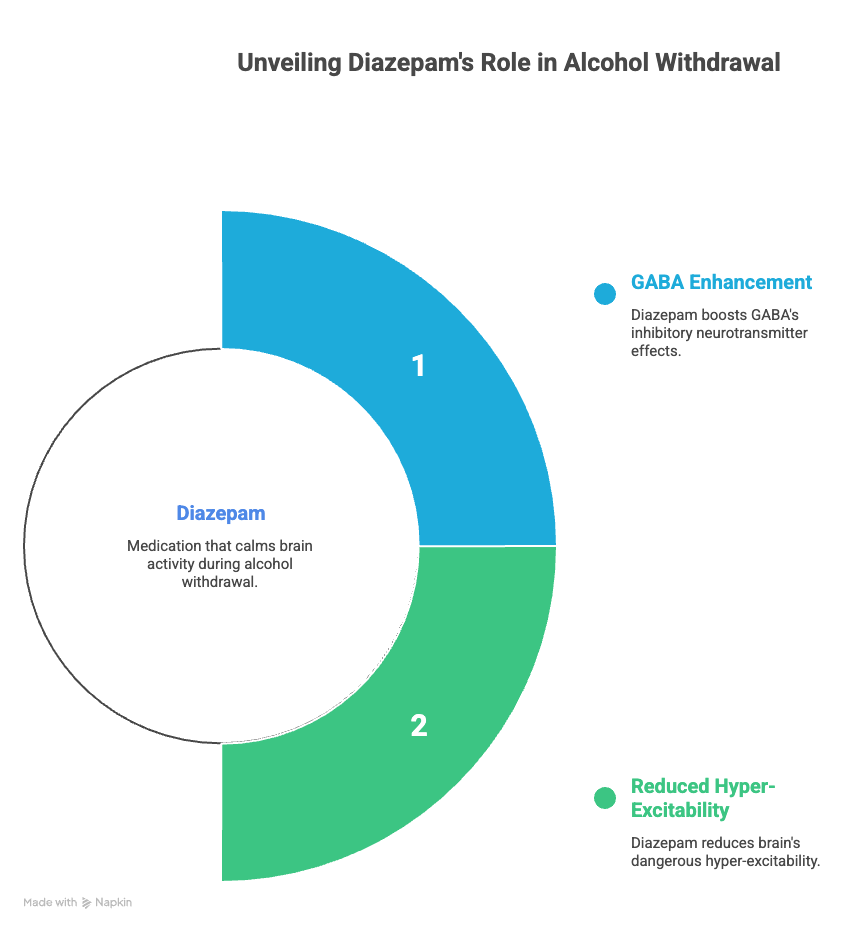
Diazepam is mainly used as a fast-acting rescue medication for prolonged or cluster Alcohol Withdrawals, not typically for long-term daily prevention. It is not typically used for long-term usage. But mostly used in daily prevention.
How to Find Quality Diazepam for Alcohol Withdrawal in the UK?
The common ways to buy high-quality diazepam for alcohol withdrawal in the UK are listed below.
- GP prescription: A general practitioner assesses symptoms and prescribes diazepam when clinically appropriate.
- Authorized online pharmacies: UK-registered online pharmacies provide diazepam following prescription and safety checks.
- Registered pharmacies: This includes NHS or private pharmacies dispensing diazepam legally with a valid doctor’s prescription.
- Hospital prescription: Hospital doctors supply diazepam during supervised treatment or emergency care.
We can find diazepam on our website too.
Can a Person Buy Diazepam for Alcohol Withdrawals Without A Prescription in the UK and Other Countries?

No, diazepam is not sold over the counter in the UK. Most other countries, like the US & Australia, also restrict the usage of prescription medicines like diazepam. Doctors usually watch out for symptoms of Alcohol Withdrawals (AWS, withdrawal timeline, medications for alcohol withdrawal, and treatments) and prescribe medicines.
Under UK law, diazepam is classified as a Class C, Schedule 4 controlled drug, which means its supply and possession are strictly controlled to reduce misuse, dependence, and safety risks.
However, we at Buy Diazepam UK are one of those few services that specialize in diazepam delivery for sale without a prescription in emergency cases. Withdrawals can be serious and life-threatening when medication isn’t nearby. We help people in such situations by providing 100% authentic medicines.